Ford F-150 Lightning Home Charging: The One EV That Uses 100 Amps
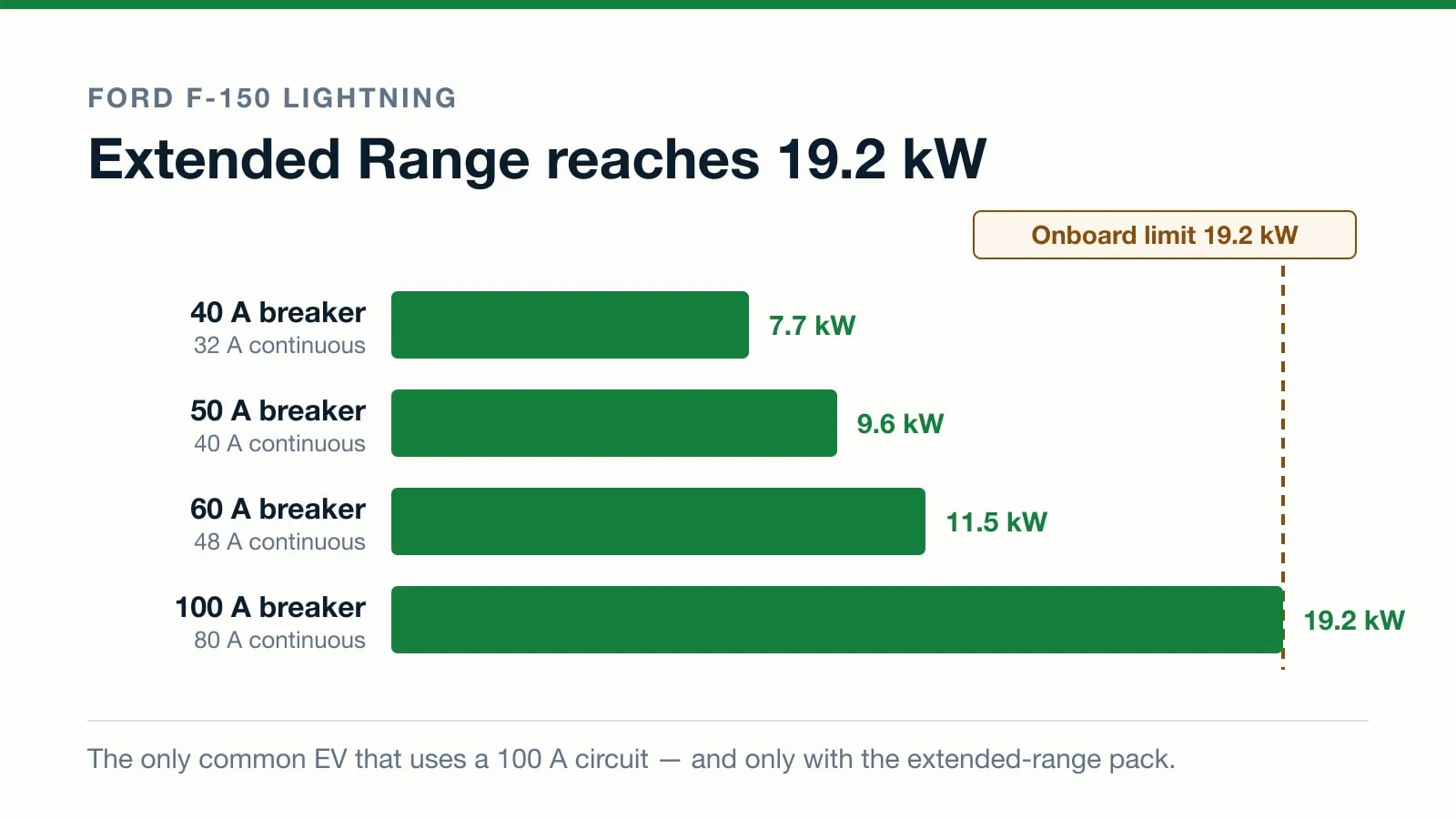
Extended Range trucks reach 19.2 kW on dual onboard chargers — the only common EV that justifies a 100 A circuit. Standard Range stops at 11.3 kW, where 100 A buys nothing.

Model-specific home charging guides: onboard charger limits, best amperage, connector type, charge curves and the right wall box for your EV.
Every guide in this section answers the same question with a different number: how much charger does this particular car actually use? The answer is set by the onboard AC charger — the converter inside the vehicle that turns wall AC into DC for the battery — and it is a hard ceiling. No wall box can push past it, however it is rated.
This matters because it is the one specification that decides whether a 48 A installation is worth its cost, and it is the one specification that appears in no quote. An installer prices the circuit you asked for. Nobody asks what the car can accept, and the gap between those two numbers is where four-figure mistakes happen.
The pattern across the cars below is consistent: most stop between 10.5 and 11.5 kW, which a 60 A circuit reaches comfortably and a 100 A circuit cannot improve on. One vehicle on this list genuinely uses 80 A, and only in one of its two battery configurations.
Extended Range trucks reach 19.2 kW on dual onboard chargers — the only common EV that justifies a 100 A circuit. Standard Range stops at 11.3 kW, where 100 A buys nothing.
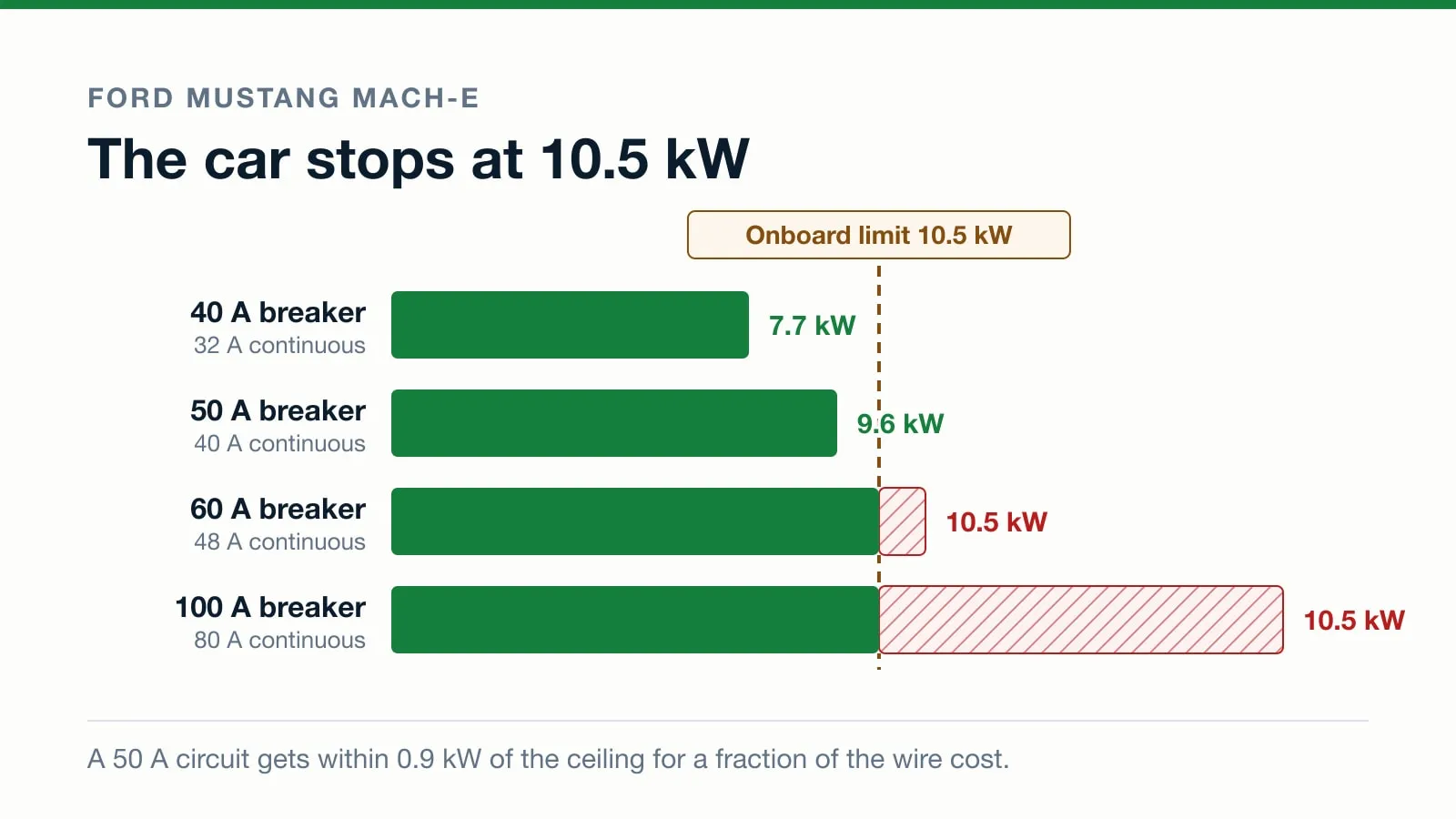
The Mach-E's onboard charger tops out at 10.5 kW, which falls between two standard circuits. Here is why a 50 A circuit gets within 0.9 kW of it, and when 60 A is worth the conductor.
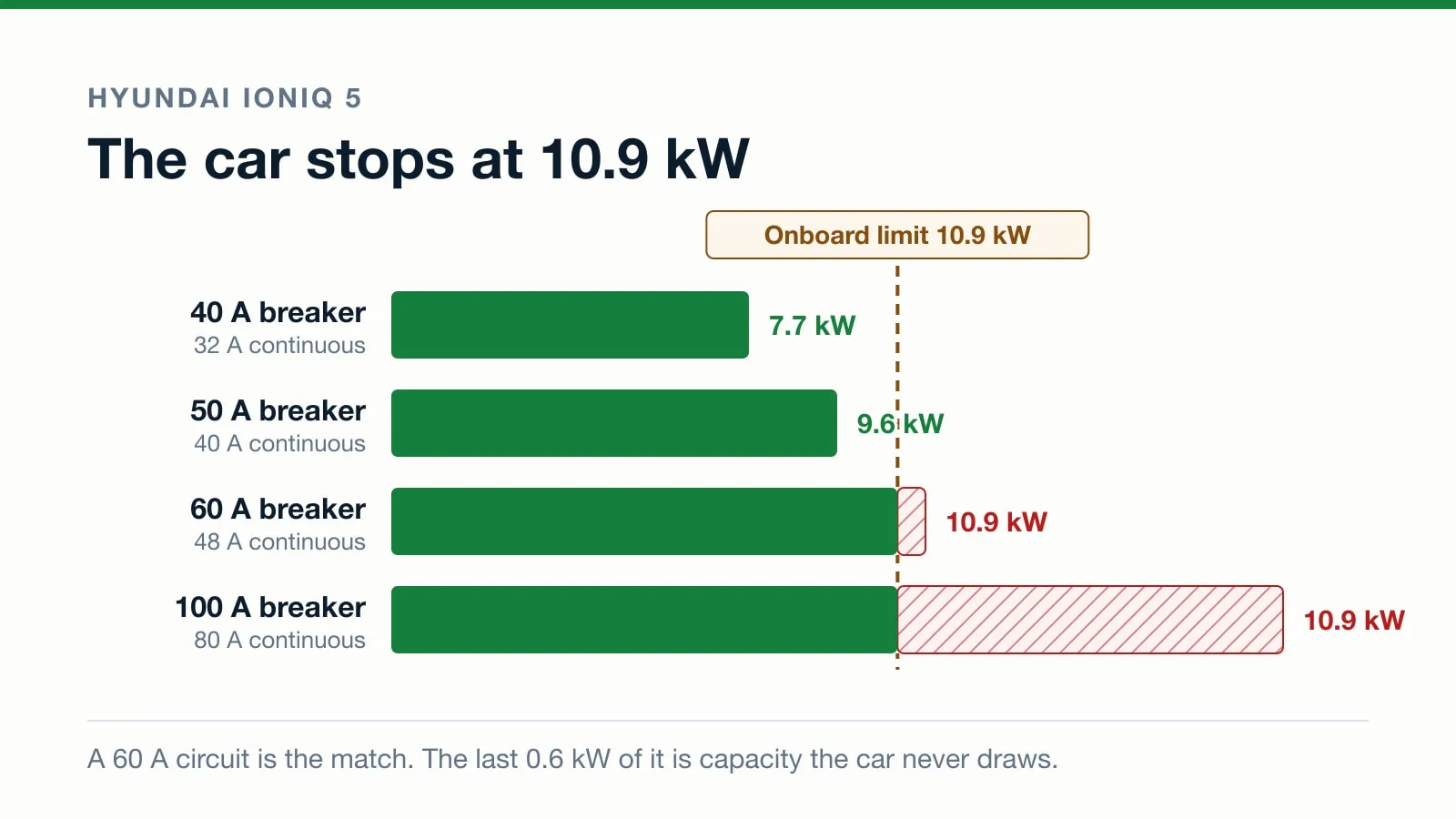
The Ioniq 5's onboard charger tops out at 10.9 kW, so a 60 A circuit is the last one that buys anything. What each option restores overnight, and why 800 V changes nothing at home.
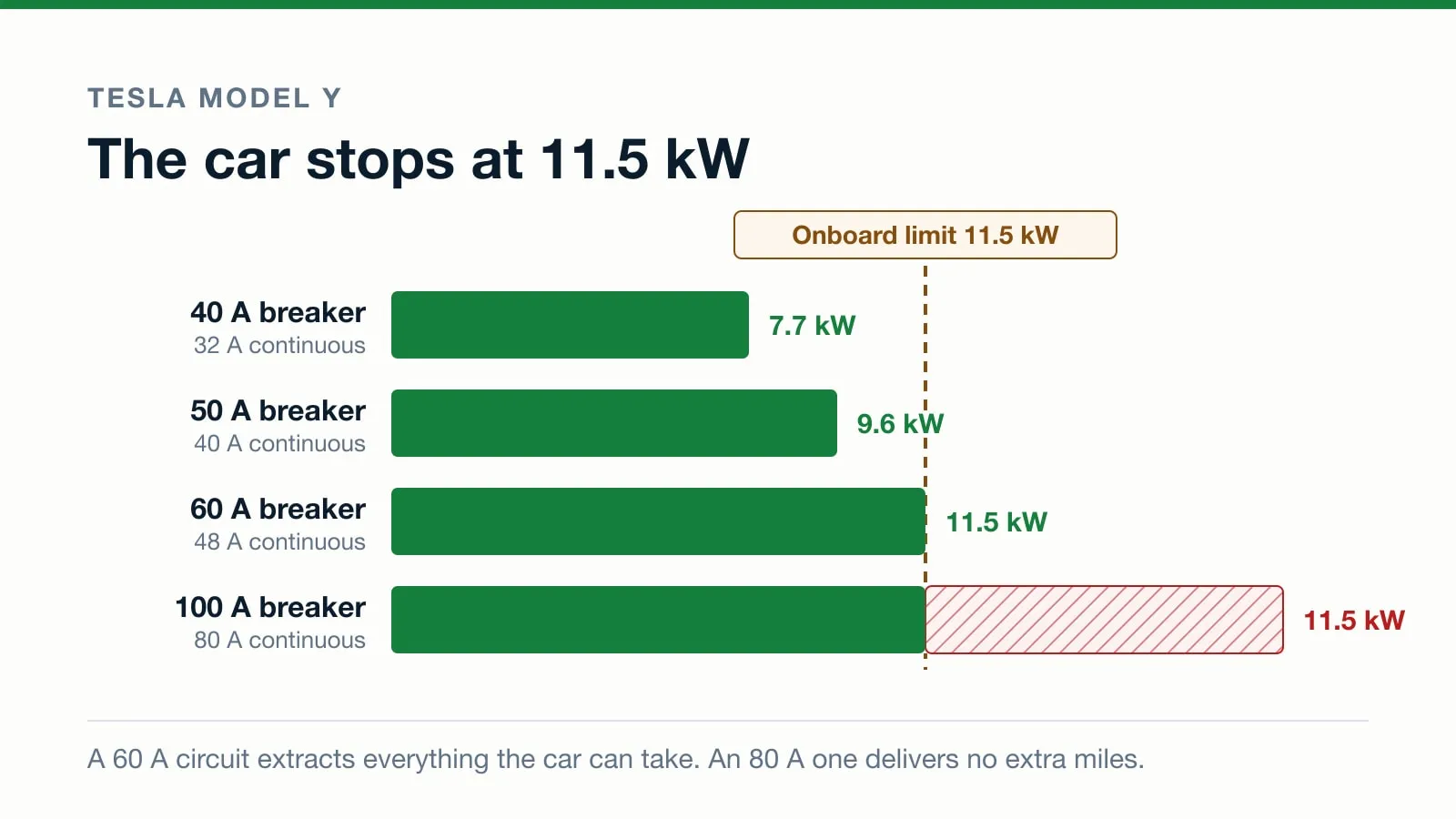
The Model Y's onboard charger stops at 11.5 kW, which makes a 60 A circuit the ceiling worth paying for. Here is what each circuit restores overnight and where the extra spend stops buying miles.
It is the converter inside the car that turns AC from your wall into DC for the battery, and its rating is the maximum your car will ever draw at home. A wall box rated above it delivers nothing extra — the car simply refuses the surplus.
The owner’s manual lists it under charging specifications, usually as a kW figure for AC. Many cars also show the maximum amperage on the charging screen when a session starts, which is the most reliable check because it reflects your exact vehicle.
Only if your car can use it and your driving needs it. Most EVs accept somewhere between 10.5 and 11.5 kW, which a 60 A circuit supplies — but a 40 A circuit still restores well over 200 miles across a ten-hour night, which covers the great majority of daily driving.
No, and the Ioniq 5 is the clearest example. DC fast charging bypasses the onboard charger entirely, so a car that is exceptional at a fast charger can be entirely ordinary in your garage.