32-Amp vs 48-Amp Home EV Charging: When the Bigger Charger Changes Nothing
A 48-amp charger delivers 50% more power than a 32-amp unit. Most cars and most homes cannot use the difference. What actually decides your charging speed.

What it really takes to install a home EV charger: permits, panel capacity, wire runs, electricians, load management and what each step costs.
A home charger installation is three separate questions that get collapsed into one, and collapsing them is what makes quotes vary by a factor of five. The first is whether your electrical service has capacity. The second is what circuit the charger needs. The third is how far the panel is from where the car parks. Only the third one is about labour, and it is usually the one nobody asks about.
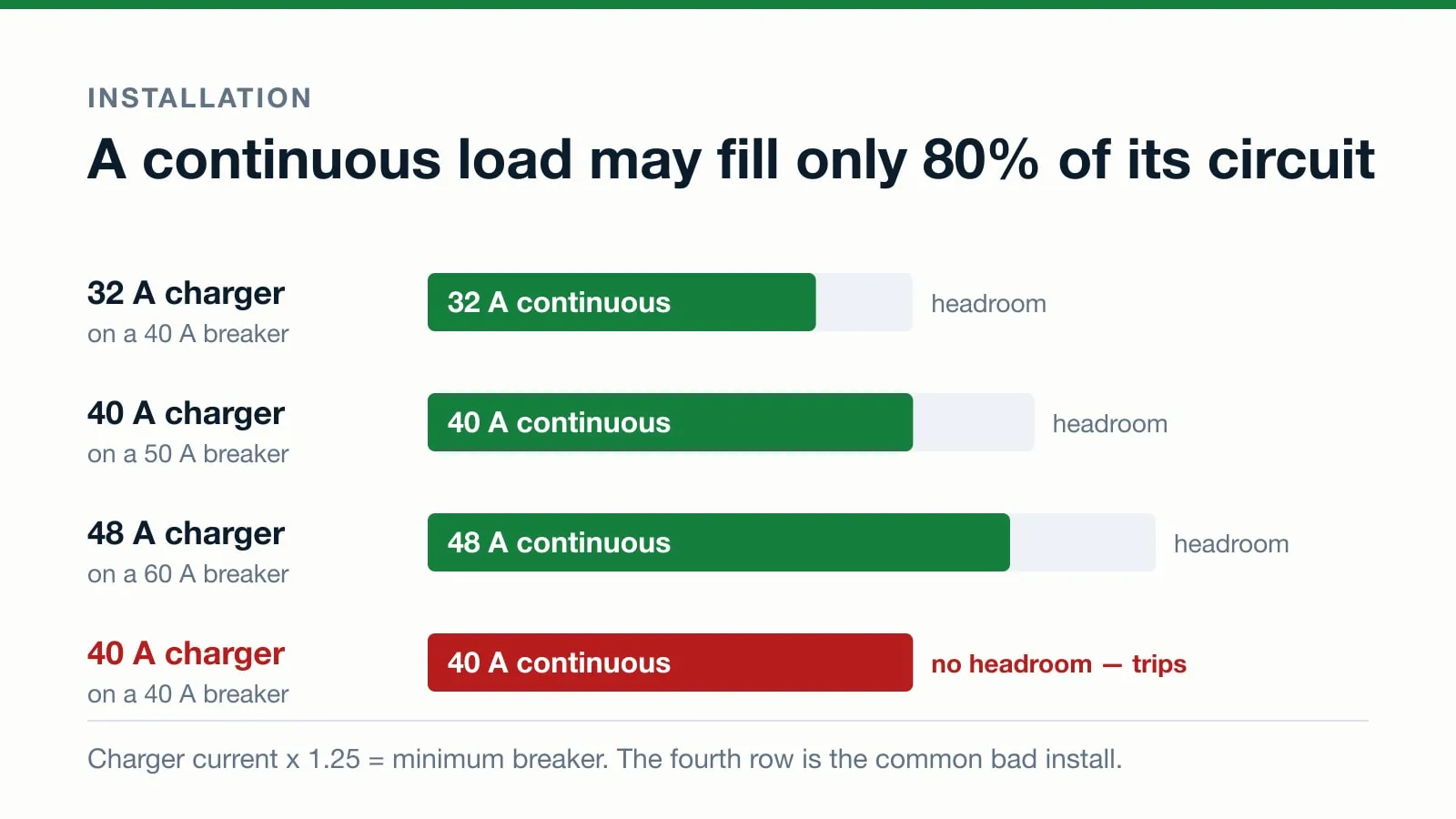
The arithmetic underneath is not complicated. Continuous loads are sized at 125% of their current, which is why a 32 A charger needs a 40 A breaker and a 48 A charger needs 60 A. Conductor size starts from that breaker and then grows with distance, because voltage drop compounds over the run. Both of those are on this page as a calculator, so you can check a quote before you accept it.
The expensive mistakes are consistent. Paying for a service upgrade that load management would have avoided. Buying 48 A for a car whose onboard charger stops at 7.7 kW. Skipping the permit, and finding out at resale. Each of those has an article below, and each of them is worth more than the article took to write.
A 48-amp charger delivers 50% more power than a 32-amp unit. Most cars and most homes cannot use the difference. What actually decides your charging speed.
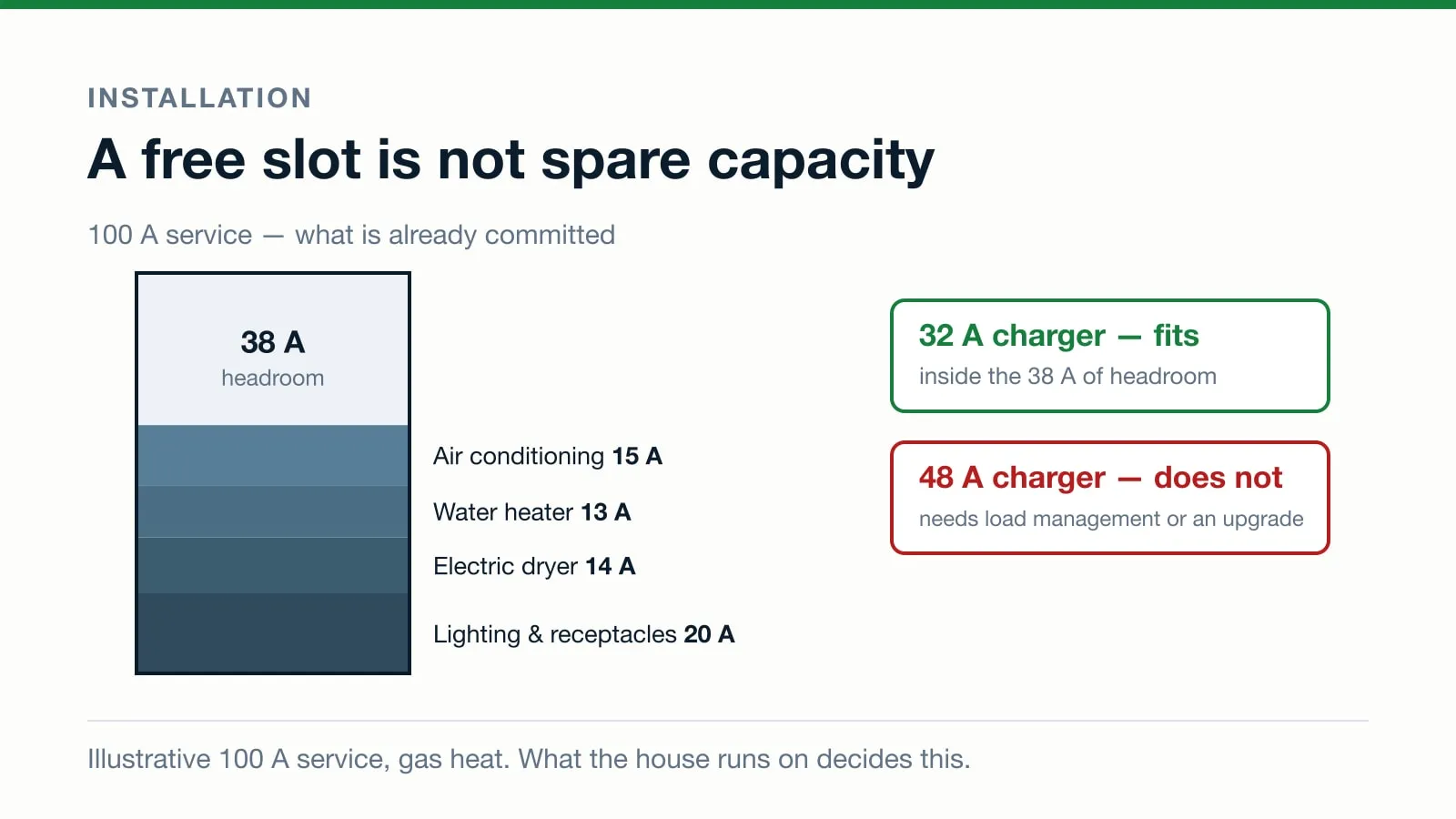
A free breaker slot is not spare capacity. Here is how a load calculation actually works, how to read your own panel before an electrician arrives, and the $300 device that replaces a $3,000 upgrade.
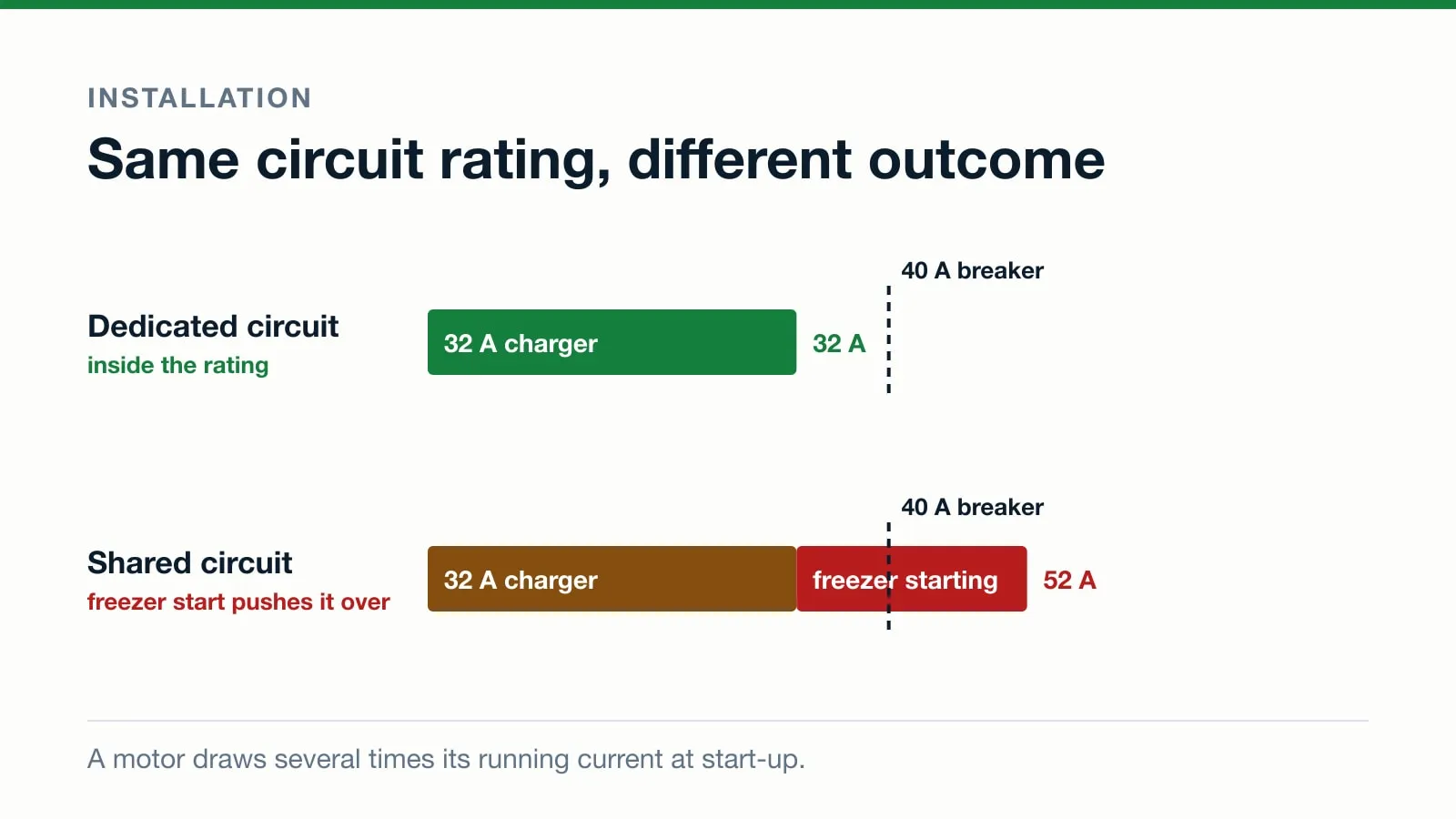
Yes, and it is a code requirement rather than a recommendation. Here is what dedicated actually means, the two-minute test for whether yours is, and why sharing fails even when the maths looks fine.
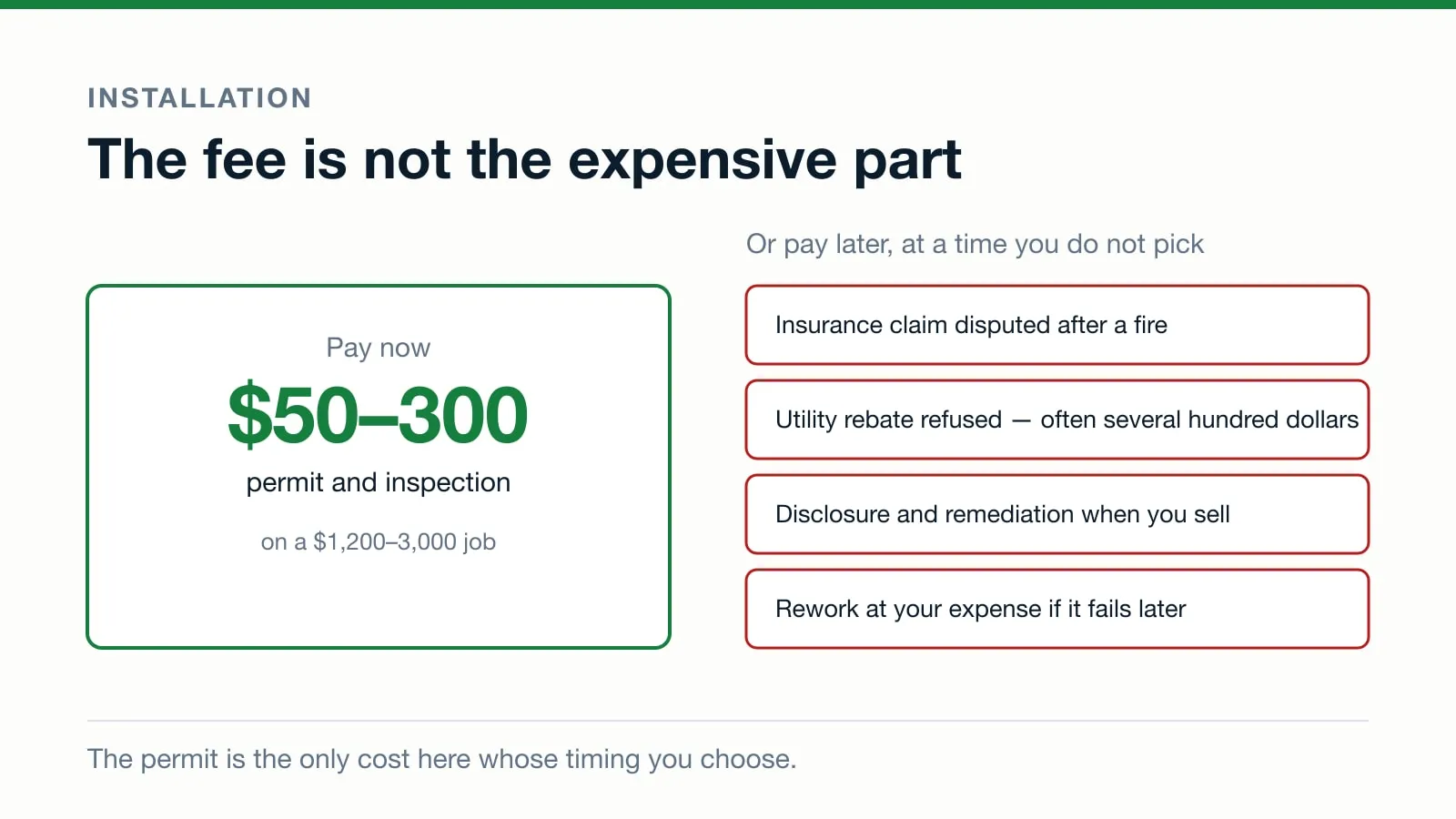
Almost everywhere, yes — and the $50 to $300 it costs is not the reason to pull one. Here is what the inspector checks, and the four things skipping it quietly costs you later.
A 32 A charger needs a 40 A breaker, a 48 A charger needs 60 A. Here is the rule that produces those numbers, why sizing to exactly 100% fails months later, and what the breaker does not decide.
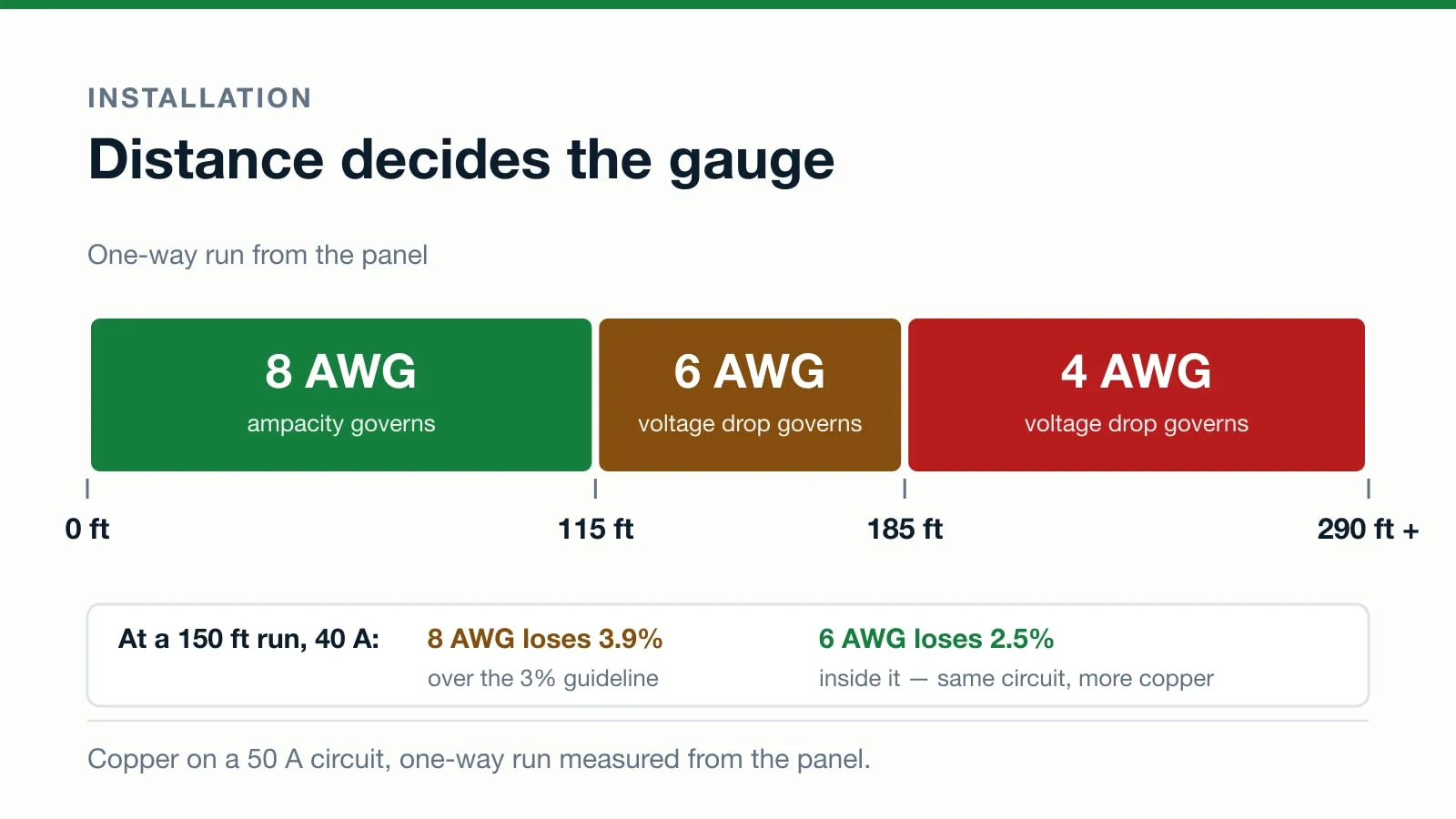
8 AWG copper covers most 40 A circuits — until the run gets long. Here is the gauge for each circuit size, why distance changes the answer, and the voltage-drop maths nobody shows you.
The plug-in option looks cheaper and more flexible. Sometimes it is. Here is the honest comparison — amperage ceilings, receptacle quality, code requirements and resale.
Real installation invoices, not averages: what a Level 2 home EV charger costs to install in 2026, what drives the price up, and where the money actually goes.
Multiply the charger’s continuous current by 1.25 and round up to a real breaker size. A 32 A charger needs a 40 A two-pole breaker, a 40 A charger needs 50 A, and a 48 A charger needs 60 A.
Very often yes. What decides it is how much of the house is electric, not the number on the main breaker. A gas-heated house on 100 A usually has room for 32 A; an all-electric house on 200 A can be tighter than its rating suggests.
In almost every US jurisdiction, yes — it is a new 240 V branch circuit. Permits typically run $50 to $250, and the inspection is what your insurer and your eventual buyer will ask about.
Most straightforward installs land between $800 and $2,000 including the unit. The two things that push it higher are distance from the panel and a service that needs upgrading — and load management often avoids the second.
Below 40 A continuous, a NEMA 14-50 receptacle is a reasonable choice and keeps the unit portable. At 48 A it is not an option: a 14-50 sits on a 50 A circuit, so anything above 40 A continuous has to be hardwired.