Do You Need a Permit to Install an EV Charger?
Almost everywhere, yes — and the $50 to $300 it costs is not the reason to pull one. Here is what the inspector checks, and the four things skipping it quietly costs you later.
Almost every US jurisdiction requires a permit to add a 240 V branch circuit, and installing a home charger is exactly that. The requirement attaches to the work, not to who does it — a homeowner doing their own wiring needs one too.
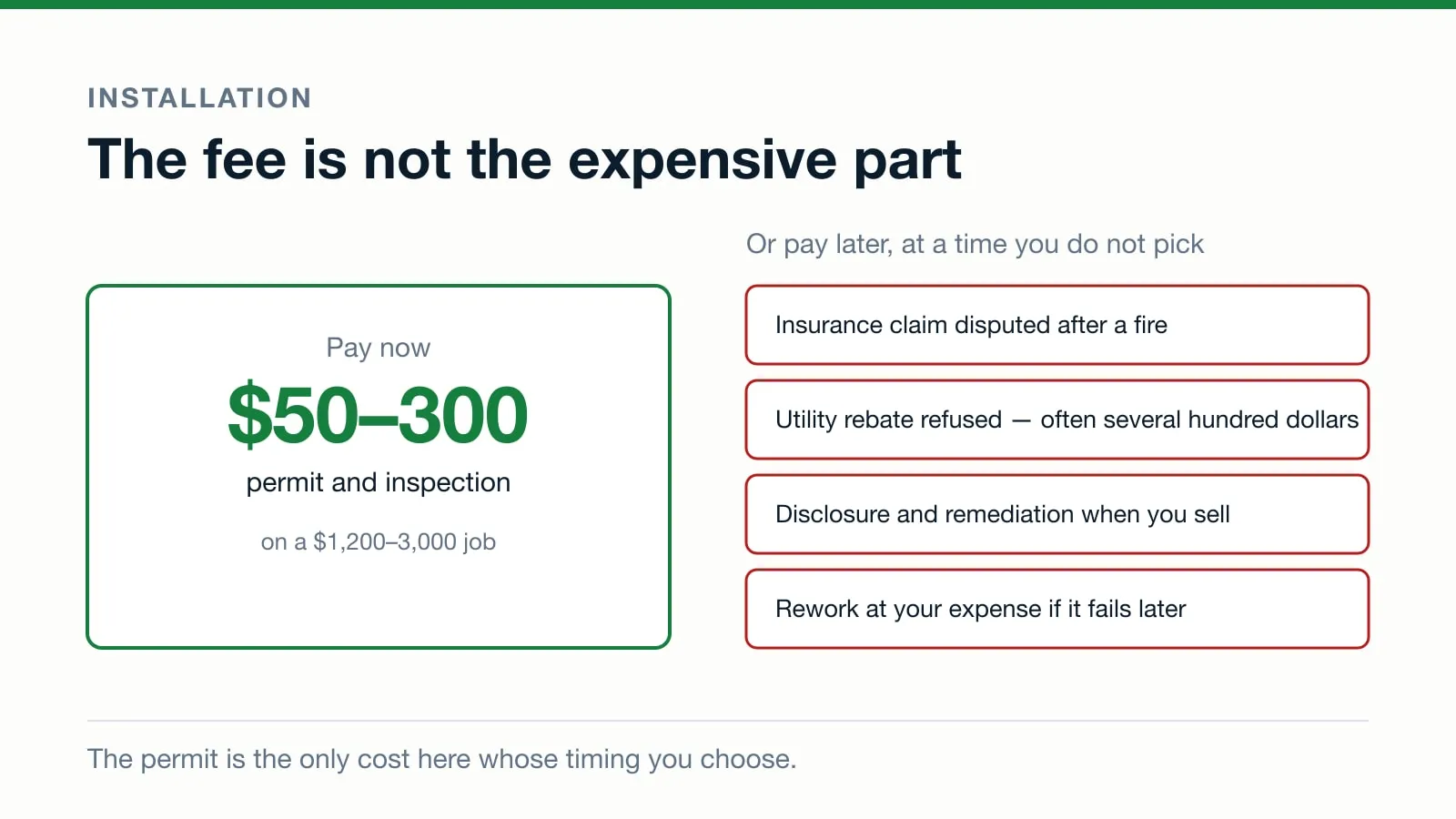
The fee is $50 to $300. On a job that totals $1,200 to $3,000 that is noise, so cost is not really the question. What people actually want to know is what happens if they skip it, and that answer is more interesting.
What the inspector is actually checking
Not the brand of charger, and not whether the cable is tidy. The list is short and it is the same list this whole cluster of articles has been about:
| Checked | Why it is on the list |
|---|---|
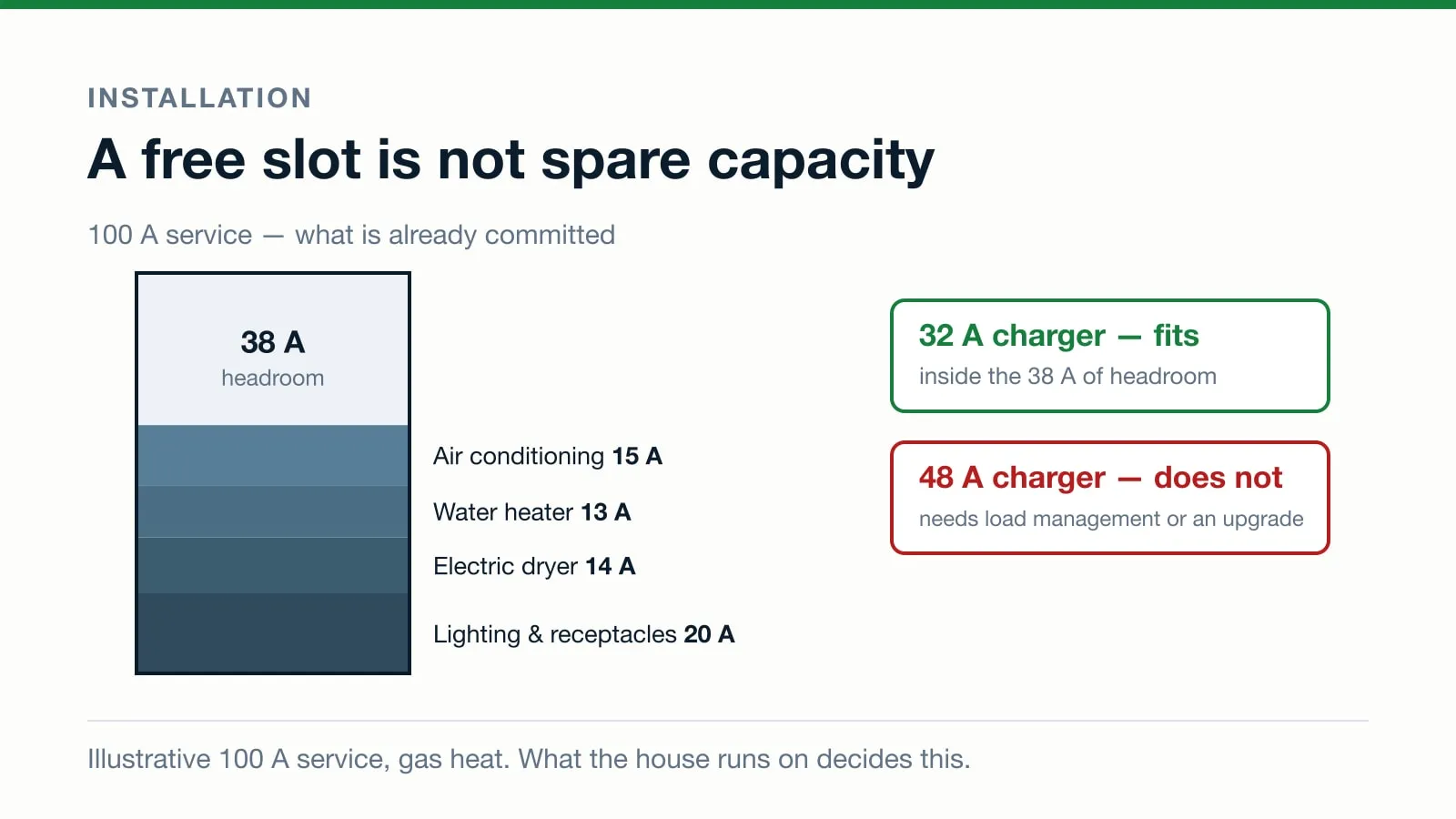
| The load calculation | That the service can carry the new circuit at all |
| Breaker size against the charger | The 125% continuous-load rule |
| Conductor size against the breaker | Ampacity, and the termination temperature rating |
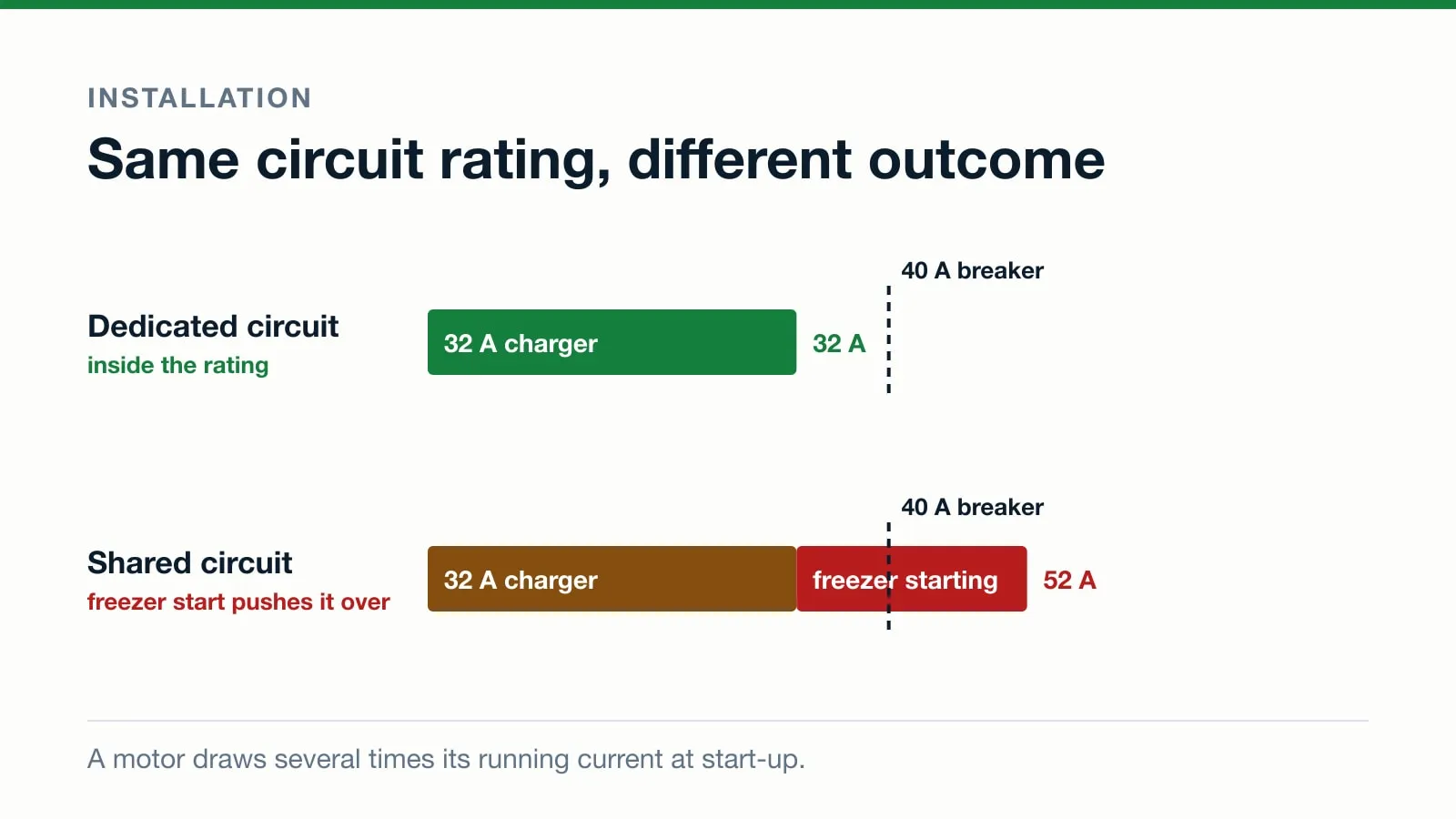
| That the circuit is dedicated | NEC 625.40 — nothing else on it |
| Terminations and torque | The most common long-term failure point |
| GFCI protection where required | Depends on the code edition your area adopted |
| Enclosure rating, if outdoors | Water ingress is the top weather-related failure |
| Equipment listing | Uncertified units fail outright |
Every one of those is something you would want checked whether or not the law required it. The permit is essentially a second person confirming the work matches the calculation — which is the part no photograph of a finished installation can tell you.
What skipping it costs
Nothing, at first. That is precisely the trap: the consequence is deferred and it arrives attached to something else.
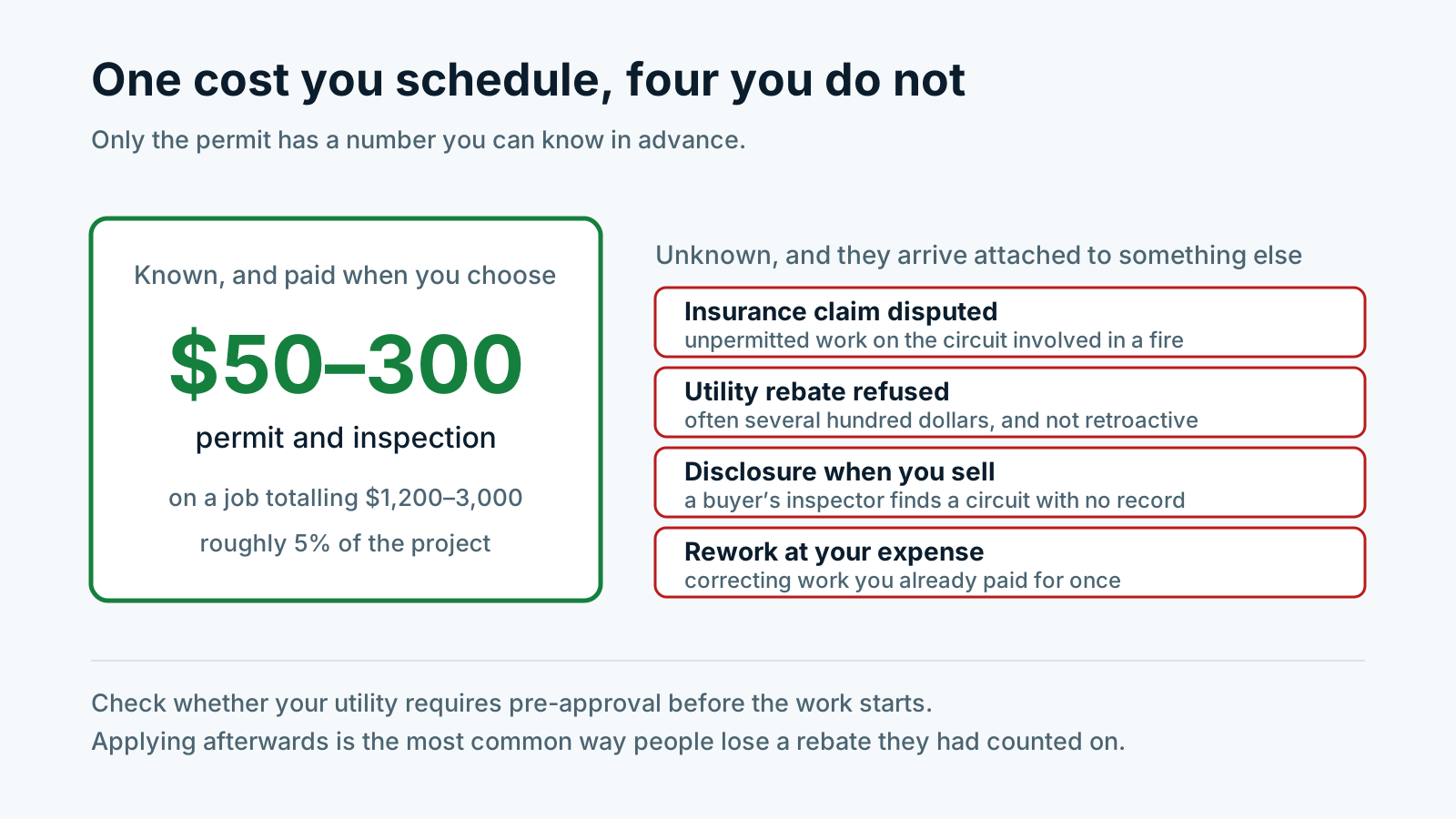
Insurance. If there is a fire and the investigation finds unpermitted electrical work on the circuit involved, the insurer has grounds to dispute the claim. Whether they succeed varies, but you do not want to find out during the worst week of your life.
Utility rebates. Many programmes require a permit number or an inspection sign-off, and some require a licensed installer. What is left after the federal credit expired is mostly state and utility money, and that is exactly the money that asks for paperwork you cannot produce retroactively.
Selling the house. Unpermitted work is generally disclosable. A buyer’s inspector finding a 60 A circuit with no record of it becomes a negotiation, and sometimes a requirement to open walls.
Rework. If it is discovered and it does not meet code, you pay to correct work you already paid for once.
The sequencing mistake that costs real money
This one is worth more than the rest of the article combined.
Many utility rebate programmes require pre-approval. You apply, you are approved, and only then does the work start. Install first and you are simply ineligible, regardless of having met every other condition.
The order that works:
- Find the rebate and read its eligibility page.
- Apply for pre-approval if it is required.
- Get quotes, and confirm the permit is included in them.
- Have the work done and inspected.
- Submit the permit number and inspection sign-off with the claim.
Doing steps 3 and 4 before step 1 is the single most expensive ordering error in this whole process, and it is invisible until the rebate is refused.
Which code edition you are inspected against
Worth understanding before you argue a point with an inspector.
The National Electrical Code is republished every three years, but it has no force until a state or city adopts it — and adoption lags. A small group of states are on the 2026 edition; most are on 2023 or 2020; a few remain older.
Your permit is issued and inspected against whichever edition your jurisdiction adopted. That is what decides whether a receptacle requires GFCI protection, what marking is needed, and which conductor rules apply. An electrician who pulls permits in your county already knows; a forum post from another state does not.
Who pulls it
Contractor permit vs homeowner permit
Pros
- A contractor permit puts the liability on the licensed contractor
- They know the local officials, the forms and the scheduling
- It should already be inside the quote — check that it is
- Homeowner permits are usually available and often cheaper
Cons
- A homeowner permit moves the liability to you
- The inspection standard does not drop because you did the work yourself
- Some rebate programmes require a licensed installer regardless
- Failing an inspection on your own permit means correcting it yourself
If a quote does not itemise the permit, ask directly whether it is included. “We don’t usually bother” is an answer, and it tells you what kind of contractor you are dealing with.
The bottom line
Pull the permit. It is the cheapest line item in the project and the only one that pays out later, in the form of a rebate you can actually claim and a house you can actually sell.
Check whether your utility requires pre-approval before booking anyone. And ask the inspecting authority which code edition applies, so you and your electrician are working from the same rules rather than from the newest ones.
Frequently asked questions
Do I need a permit to install an EV charger?
In almost every US jurisdiction, yes. Adding a 240 V branch circuit is permitted electrical work regardless of who does it. A handful of areas exempt like-for-like replacement of existing equipment, but adding a new circuit is not that.
How much does an EV charger permit cost?
Typically $50 to $300 including the inspection visit, though it varies widely by jurisdiction. It is one of the smaller line items in an installation that usually totals $1,200 to $3,000.
What does the inspector actually check?
The load calculation, the breaker and conductor sizing against it, that the circuit is dedicated, the terminations and torque, GFCI protection where the adopted code requires it, the enclosure rating if outdoors, and that the equipment is listed by a recognised testing laboratory.
What happens if I skip the permit?
Usually nothing, until something else happens. Then it surfaces in an insurance claim, a utility rebate application, or a home sale — and in each of those the unpermitted work becomes your problem at the worst possible moment.
Can I pull the permit myself?
Many jurisdictions allow a homeowner permit for work on their own residence, with the same inspection. It does not lower the standard the work has to meet, and it moves the liability to you rather than to a licensed contractor.
Does my utility rebate require a permit?
Frequently, yes. Many programmes require a permit number, an inspection sign-off, or a licensed installer. Applying afterwards with unpermitted work is a common way people lose several hundred dollars they had counted on.