The Federal EV Charger Tax Credit Is Gone. Here Is What Replaced It
The 30C credit died on June 30, 2026. Most guides still tell you to claim it. Here is what actually happened, whether you can still file for it, and where the remaining money is.

If you have read almost any guide to home EV charging in the last month, you were told to claim a 30% federal tax credit worth up to $1,000. That advice is now wrong, and it is going to stay wrong in a lot of places for a long time, because nobody goes back and edits an article that is quietly earning traffic.
Here is the actual position, as of August 2026.
What happened
The federal credit for home EV charging equipment lived in Section 30C of the tax code. It paid 30% of your total installation cost, capped at $1,000 for a residential property — hardware, labour and permit all counted.
It was originally scheduled to run through the end of 2032. The One Big Beautiful Bill Act, signed in July 2025, pulled that date forward. For homes, 30C now applies only to property placed in service on or before June 30, 2026.
“Placed in service” is the phrase that matters, and it does not mean the day you paid. It means the day the charger was installed and capable of operating. A deposit in May and an energised charger in July gets you nothing.
Can you still claim it?
Yes — but only for work already finished. Two conditions had to be met:
- Timing. The charger was placed in service on or before June 30, 2026.
- Location. Your address sat in an eligible census tract — either a low-income community or a non-urban area. This requirement was added in 2023 and caught a lot of people out, because plenty of suburban addresses did not qualify.
If both are true, you file IRS Form 8911 with your 2026 return, which you submit in early 2027. Keep the invoice, the permit and the inspection sign-off. The credit is non-refundable, so it reduces tax you owe rather than generating a payment.
If you are not certain your address qualified, the census tract eligibility is determined by the tract number at your property, not by your city or ZIP code. Two houses on the same street can land differently. Your tax preparer can check the tract against the published lists.
What did not change
This is the part most people get wrong when they hear “the EV credit is gone.”
30C was the charger credit. It is separate from the credits that applied to the vehicle. If you are researching what a car qualifies for, that is a different section of the code with a different history, and you should not use this article to reason about it.
Where the remaining money is
State and utility programmes are now the entire story. They are also, in a lot of service territories, worth more than 30C ever was — the federal cap was $1,000, and some utility rebates beat that on their own. (Outside the US the pattern is the same: national schemes narrowing to regional ones.)
The problem is that they are fragmented. There is no national list that stays accurate, because programmes open, exhaust their budget, and close on their own schedules. So instead of a table that will be stale in six weeks, here is how to actually find yours.
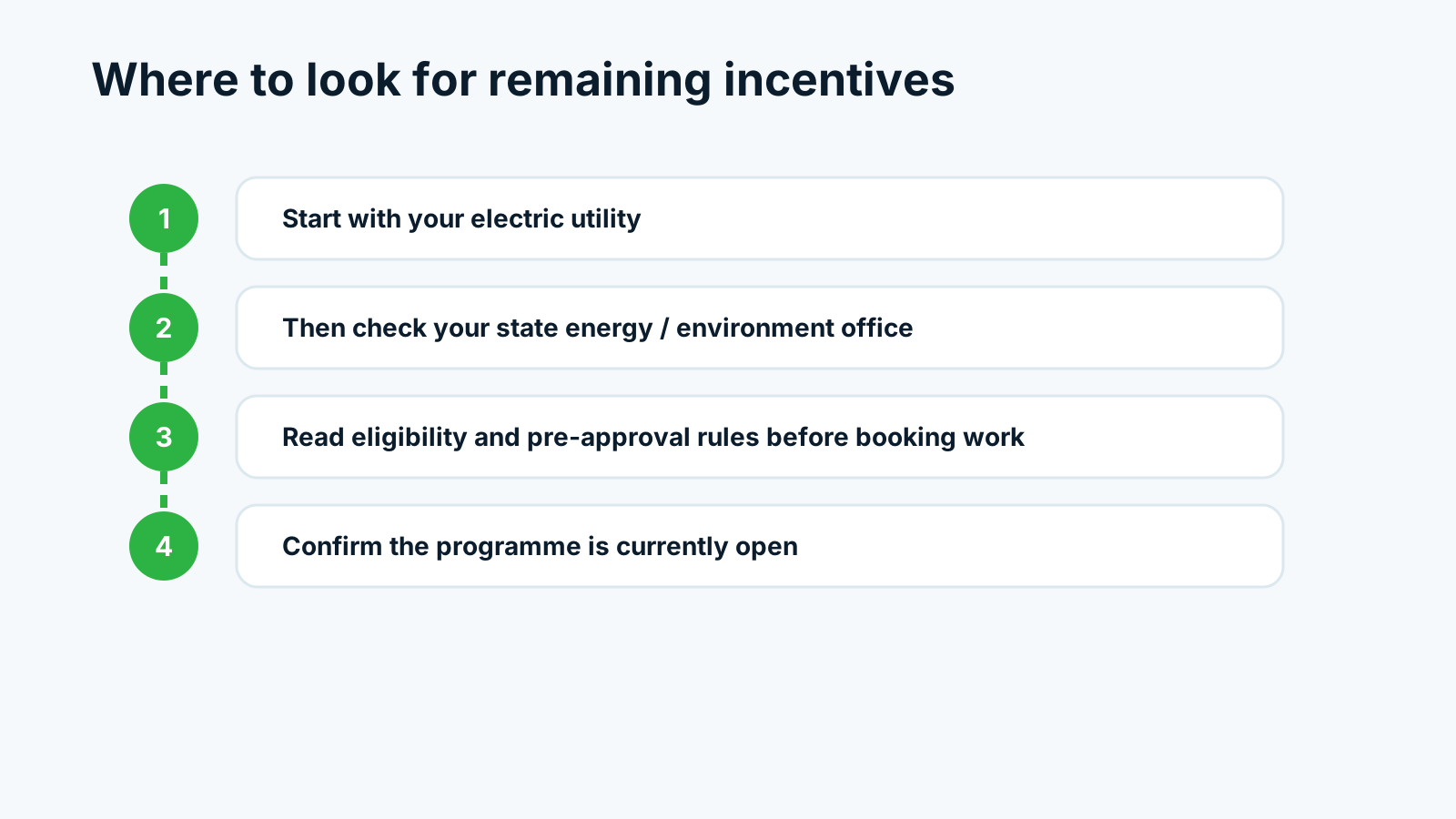
1. Start with your utility, not with Google
Search the name of your electric utility plus “EV charger rebate”. Go to the utility’s own site, not an aggregator. Utility programmes are the most common source of real money and the least well indexed.
What you are looking for:
- Equipment rebates — a flat amount off an approved charger.
- Installation rebates — a contribution toward the electrical work.
- Time-of-use enrolment bonuses — sometimes several hundred dollars just for moving to an EV tariff and charging overnight, which halves your cost per mile on its own.
- Managed charging programmes — ongoing bill credits for letting the utility briefly pause your charging at peak. These pay every year rather than once.
That last category is the one people skip and it is often the best value over time.
2. Then check your state energy office
State programmes are usually administered by an energy or environment department. They tend to be larger, harder to qualify for, and frequently oversubscribed. Check whether the programme is currently open before you plan around it.
3. Check whether your rebate requires pre-approval
This is the single most expensive mistake in this whole area. Many utility programmes require you to apply and be approved before the work starts. Install first and you are simply ineligible, regardless of whether you met every other condition.
Read the eligibility page before you book an electrician, not after — and before you decide how much charger you actually need, since a smaller unit on a smaller circuit changes what the rebate has to cover.
What this means for the decision to install
With 30C gone, a home charger project costs what it costs. For most homes that is somewhere between $1,200 and $3,000 all in, and the figure is driven mostly by distance from your panel and whether your service has headroom — we break the numbers down in what it costs to install a home EV charger.
The honest framing: the credit was worth up to $1,000, but only in qualifying census tracts, and only up to 30%. A lot of households were never getting the full amount anyway. Its disappearance changes the payback arithmetic less than the headlines suggest — and the ongoing saving versus petrol is what actually carries the decision.
What it does change is urgency. There is no deadline to beat any more, and no reason to rush a quote. Take the time to get three, and to check your utility first.
How to check whether a guide is out of date
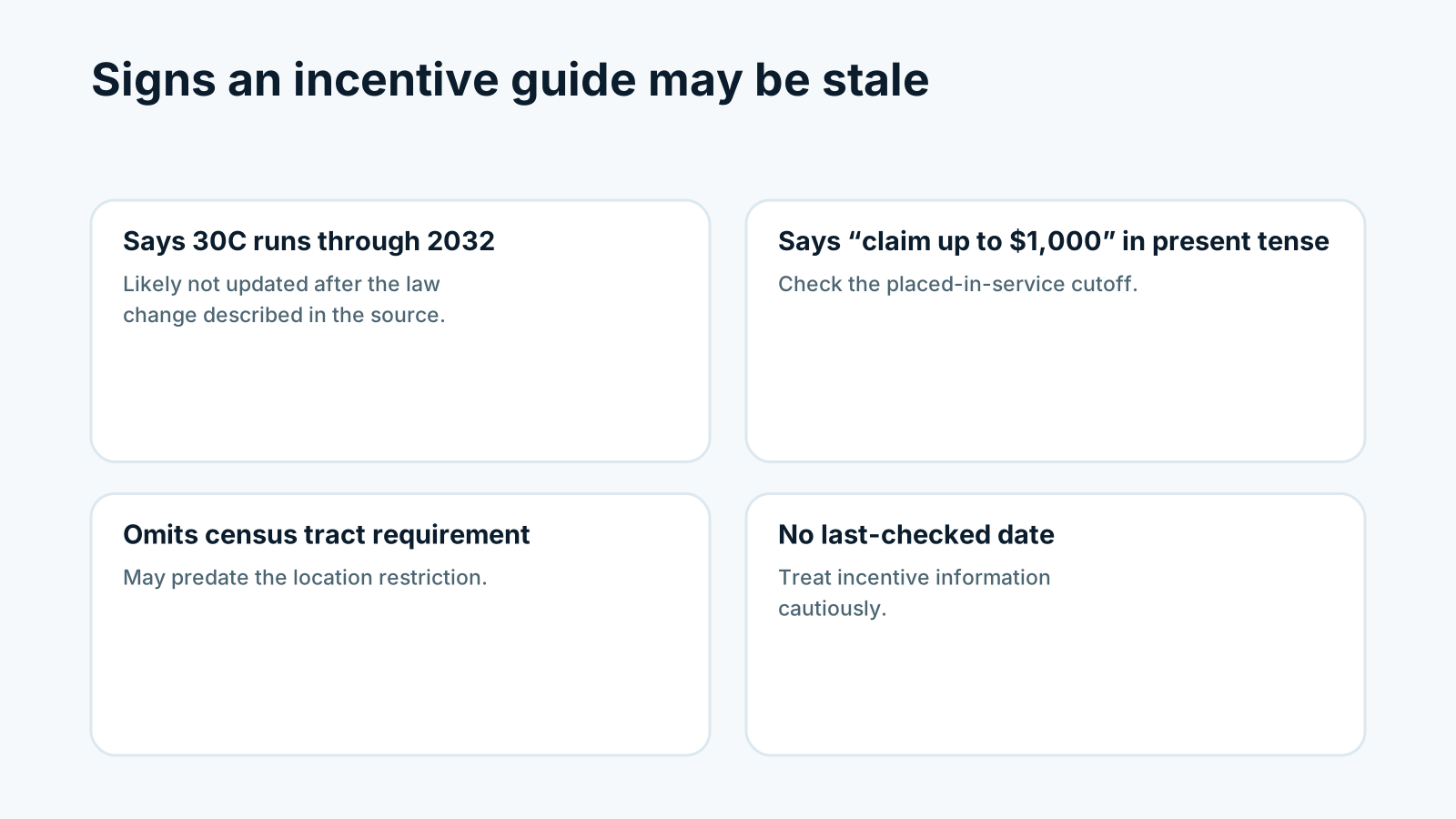
A practical test you can apply to anything you read on this topic from here on:
- If it says the credit runs “through 2032”, it was written before July 2025 and never updated.
- If it says “claim up to $1,000” in the present tense with a 2026 date on the page, the date is a lie — it is being refreshed automatically without anyone rereading the text.
- If it does not mention the census tract requirement at all, it was written before 2023.
We date every article on this site and say when a figure was last checked. This one was written on August 8, 2026, five weeks after the credit lapsed.
Frequently asked questions
Is the federal EV charger tax credit still available in 2026?
No. The Section 30C credit expired for property placed in service after June 30, 2026. If your charger was installed and operational on or before that date you can still claim it on your return. Anything energised on July 1 or later gets nothing.
How much was the 30C credit worth?
For a home installation it was 30% of the total cost, capped at $1,000. That covered the charger, the electrical work and the permit — not the vehicle.
Why did the credit end early?
The One Big Beautiful Bill Act, signed in July 2025, moved the residential expiry forward to June 30, 2026. The credit had originally been scheduled to run to the end of 2032.
Can I still claim it if I installed my charger in May 2026?
Yes, if the property was placed in service on or before June 30, 2026 and your address sat in a qualifying census tract. You claim it on IRS Form 8911 with the return covering the 2026 tax year, which you file in 2027.
Is any replacement credit coming?
Nothing is pending. No bill to extend or replace 30C has been introduced. Plan on state and utility programmes being the only help available.