
Level 1 vs Level 2 Charging: Which One Do You Actually Need?
Level 1 plugs into any outlet and costs nothing. Level 2 is four times faster and needs an electrician. Here is how to tell which one fits your driving, in miles per day.
HomeEnergyX may be supported by display advertising. Advertising does not influence our calculations or conclusions. This page contains no affiliate links.
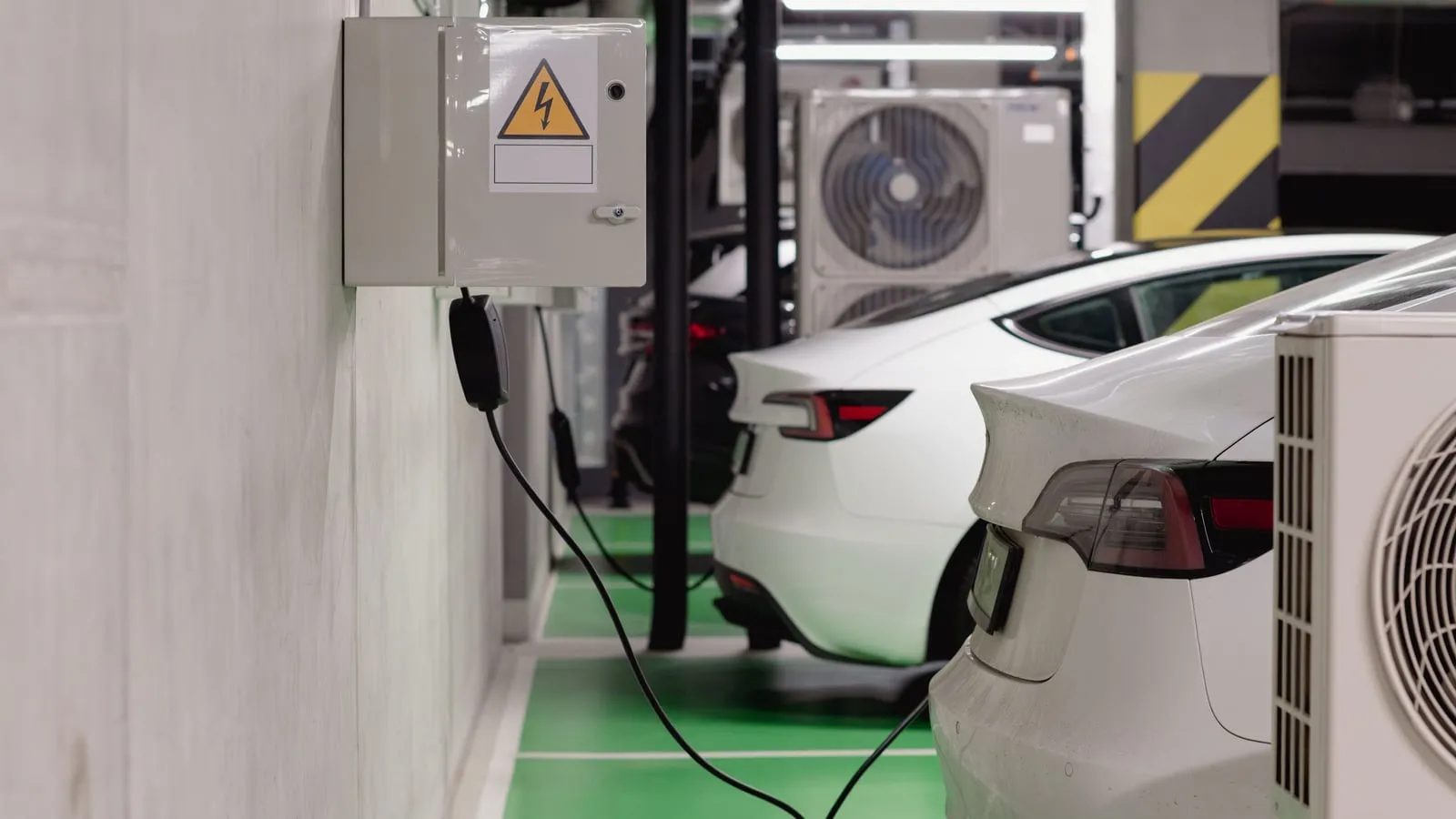
Nearly every EV ships with a Level 1 cable in the trunk, and nearly every owner is told within a week that they need a Level 2 charger. Sometimes that is true. Often it is not, and the honest test is a single number: how many miles do you drive on a typical day?
The difference in one table
| Level 1 | Level 2 | |
|---|---|---|
| Voltage | 120 V | 240 V |
| Typical current | 12 A | 32–48 A |
| Power | ~1.4 kW | 7.7–11.5 kW |
| Range added per hour | 3–5 miles | 20–40 miles |
| 10% → 80% on a 75 kWh pack | ~37 hours | ~5–7 hours |
| Hardware cost | $0 (included) | $400–$900 |
| Installation | None | $800–$2,100 |
The headline is that Level 2 is four to eight times faster. The more useful framing is what each one refills overnight.
Think in “miles per night”, not kilowatts
Plug in at 7 pm, unplug at 7 am — twelve hours.
- Level 1 returns roughly 40 to 55 miles.
- Level 2 at 32 A returns roughly 280 to 340 miles, which is more than any mainstream EV can even hold.
So the real question is whether 45-ish miles a night covers you. The average US driver covers about 37 miles a day. For a large share of households, Level 1 genuinely keeps up — and the car spends the weekend catching up on anything unusual.
When Level 1 is genuinely enough
Pros
- You drive under ~40 miles on a typical day
- The car parks in the same place for 10+ hours
- You have a nearby outlet on a circuit that is not shared with much else
- Costs nothing: the cable came with the car
Cons
- A single 200-mile day takes most of a week to recover from
- Cold weather can cut the rate to 2–3 miles per hour as the pack self-heats
- Plug-in hybrids aside, it is unusable if you also need to precondition the cabin
- Ties up an outlet and a cable run for 12 hours a day
When Level 2 stops being optional
Four situations flip the answer decisively:
- You drive more than about 50 miles a day. Level 1 loses ground every day and never catches up during the week.
- You have two EVs. One overnight Level 2 session can top up both in sequence; Level 1 cannot serve either properly.
- You park for short windows. A car that is home from 11 pm to 6 am gets ~25 miles from Level 1. That is not a charging strategy.
- You want time-of-use savings. Cheap overnight tariff windows are often only four to six hours long. Level 1 cannot move enough energy inside the window to benefit; Level 2 can put the whole night’s charge in it.
That last point is the one people underestimate. On a tariff with a 4 hour super-off-peak window, a Level 2 charger does not just charge faster — it changes what you pay per mile. At the US national average of 18.44 ¢/kWh a typical EV costs about 6 cents a mile; on a 9 ¢ overnight window that roughly halves. We work the numbers through in what it actually costs to charge at home.
What “Level 2” actually costs to get
The charger itself is the small part. Below is what we see people buy most often once they have decided.
Hardware is the smaller part of the cost, and the specification that matters most is one people rarely check:
| What to check | Why | |
|---|---|---|
| Your car’s onboard AC limit | Owner’s manual, quoted in kW | If the car tops out at 7.7 kW, an 11.5 kW charger delivers 7.7 kW. The upgrade buys nothing |
| Adjustable current | Selectable down to ~16 A | Lets you fit the charger to the circuit an electrician says you can have |
| Cable length | Mounting point to charge port, plus slack | The most common regret after installation |
| Certification | Listed by a recognised testing laboratory | Uncertified units can fail inspection |
We have not bench-tested chargers and will not rank them until we have. What is verifiable is that above roughly $600 you are buying app features rather than charging speed.
Installation is the bigger line item and depends almost entirely on how far the charger sits from your panel — we break the invoices down in what it costs to install a home EV charger.
Common mistakes
- Buying a 48 A charger for a 100 A service. The charger is not the constraint; your panel is. Match the hardware to the circuit an electrician says you can have.
- Using an extension cord for Level 1. A sustained 12 A draw through an undersized cord is one of the few genuinely dangerous things owners do routinely.
- Assuming faster is better for the battery. It is not worse either — AC charging at these rates is undemanding. Battery care is about avoiding long periods at 100% and heavy DC fast charging, not about kW at home.
- Ignoring the outlet’s other loads. A Level 1 charger on the same circuit as a freezer and a workshop will trip breakers. It needs its own circuit too, ideally.
The bottom line
Start with Level 1, measure for two weeks, and upgrade if the battery percentage trends down. If you already know you drive 60+ miles a day, or you park for short windows, or you are on a time-of-use tariff, skip the experiment — Level 2 will pay for itself in convenience within a month.
Frequently asked questions
What is the difference between Level 1 and Level 2 charging?
Level 1 uses a standard 120 V household outlet and adds roughly 3 to 5 miles of range per hour. Level 2 uses a dedicated 240 V circuit and adds roughly 20 to 40 miles per hour — about four to eight times faster.
Is Level 1 charging enough for most people?
If you drive under about 40 miles a day and can leave the car plugged in overnight, Level 1 keeps up indefinitely and costs nothing to set up. Over that, or if the car sits outside for less than 10 hours at a time, Level 2 becomes the practical choice.
Does Level 2 charging damage the battery?
No. AC charging at 7 to 11 kW is gentle by modern battery standards — it is repeated DC fast charging at high state of charge that accelerates degradation, not overnight Level 2.
Can I use a regular extension cord for Level 1 charging?
You should not. Most household extension cords are undersized for a sustained 12 A draw and are a genuine fire risk. If you must extend the reach, use a heavy-gauge outdoor cord rated for the load, and treat it as a temporary fix rather than a setup.