Home vs Public Fast Charging: The Real Cost Difference in 2026
Public DC fast charging averages around 40 to 42 cents per kWh. Home averages 18.44. Here is what that gap costs over a year, and when paying the premium is still right.

The case for installing a home charger is usually made on convenience. The stronger argument is arithmetic: the price gap between your garage and a highway charger is large, and it compounds every mile you drive.
Here are the current numbers.
The two rates
| Cost per kWh | |
|---|---|
| Home, US residential average (EIA, May 2026) | 18.44 ¢ |
| Home, typical overnight time-of-use window | 6–12 ¢ |
| Public DC fast, national average | ~40–42 ¢ |
| Tesla Supercharger, average | ~42 ¢ |
| EVgo | ~44 ¢, range 34–56 ¢ |
| Electrify America | ~48–56 ¢, range 43–64 ¢ |
View as table
| Item | US cents per kWh |
|---|---|
| Electrify America — range 43–64 ¢ | ~48–56 ¢ |
| EVgo — range 34–56 ¢ | ~44 ¢ |
| Tesla Supercharger | ~42 ¢ |
| Home, flat rate — US average | 18.44 ¢ |
| Home, overnight — time-of-use window | 6–12 ¢ |
Network rates vary by site and time of day. Always check in-app before plugging in.
Source: EIA (US residential average, Aug 2026); published network rates and AAA national averages, 2026.
Public fast charging runs roughly two to three times home rates on a flat tariff. Against an overnight window it is four to five times.
What that means per session
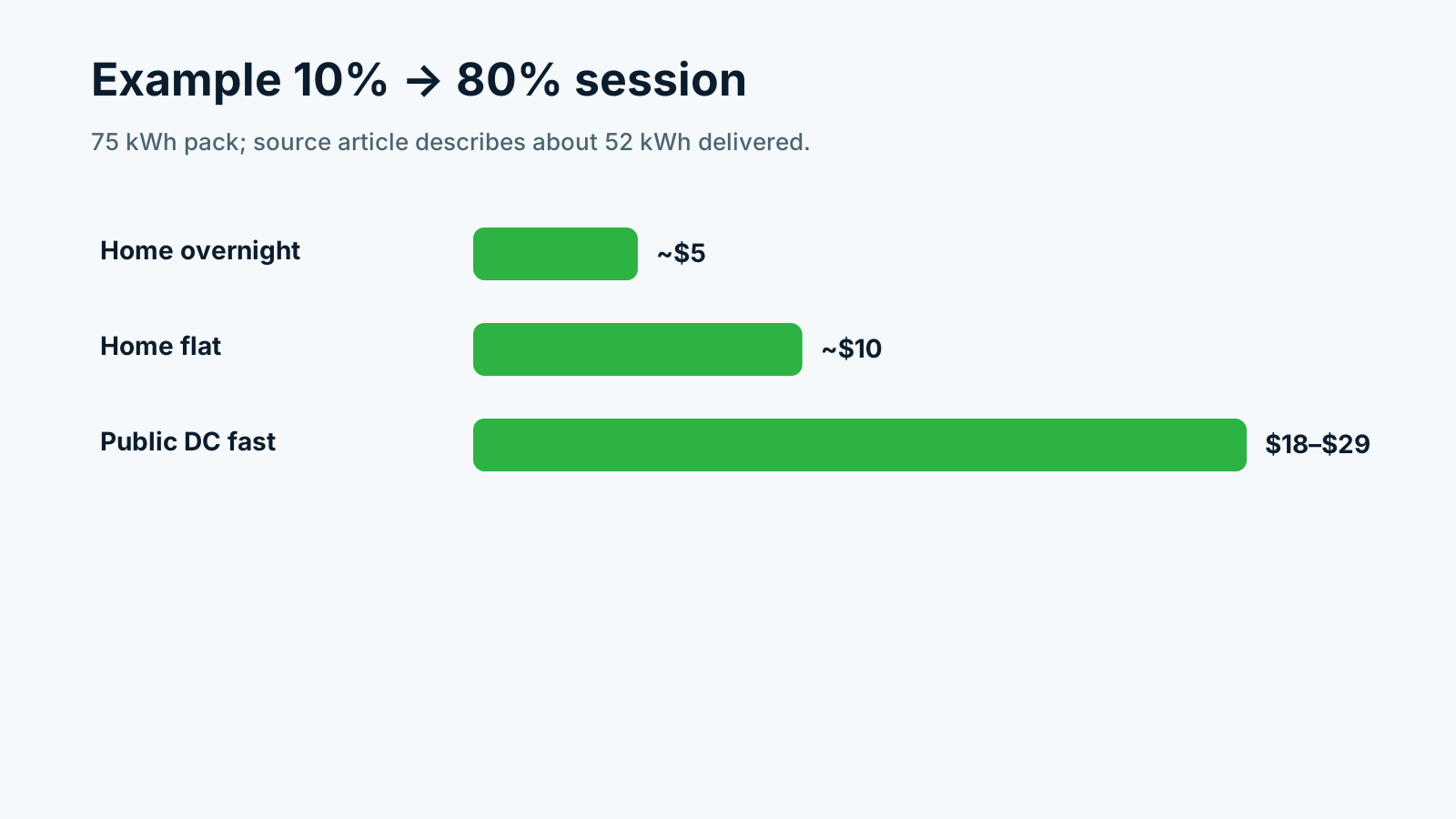
A 10% to 80% fast charge on a 75 kWh pack delivers about 52 kWh:
| Where | Cost |
|---|---|
| Public DC fast | $18 – $29 |
| Home, flat rate 18.44 ¢ | ~$10 |
| Home, overnight 9 ¢ | ~$5 |
Same energy. Same miles. Three times the price at the top.
The annual number
This is the figure that should drive the installation decision.
Driving 12,000 miles a year at 3.5 mi/kWh needs about 3,430 kWh into the battery, or roughly 3,900 kWh metered once charging losses are counted.
| Charging pattern | Annual cost |
|---|---|
| All at home, flat rate | ~$720 |
| All at home, overnight tariff | ~$350 |
| 80% home / 20% public | ~$860 |
| All public fast charging | ~$1,640 |
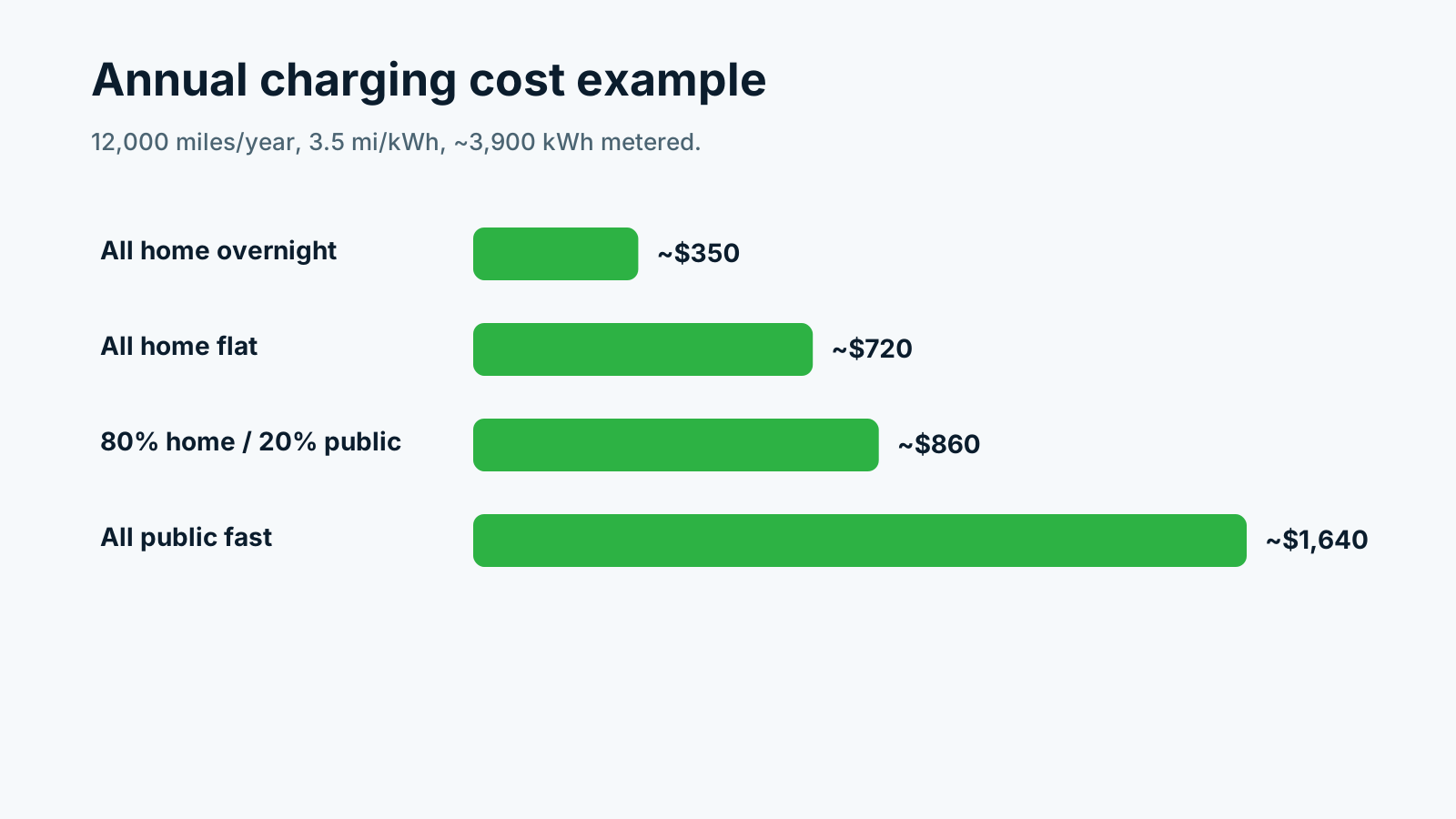
The realistic comparison for most owners is the 80/20 line against all-public: about $780 a year. A home installation costing $1,200 to $3,000 pays for itself in roughly two to four years on that basis alone — faster if you move to an overnight tariff.
When paying the fast-charging premium is still correct
Pros
- Road trips — there is no alternative, and the premium is trivial per journey
- You have no home charging and no realistic route to it
- Free workplace or destination charging, which beats home outright
- Rare, occasional use where a subscription would not pay back
Cons
- Daily reliance triples your cost per mile against home
- Repeated high-power sessions at high state of charge are harder on the pack
- Queues and out-of-service units cost time you do not spend at home
- Pricing varies by site and hour, so budgeting is harder
Why fast charging costs more
Worth understanding, because it explains why the gap is structural rather than opportunistic.
A home wall box is a switch. It passes household AC through and the car does the conversion. The hardware is cheap and the electricity is billed at residential rates.
A DC fast charger does the AC-to-DC conversion itself, at hundreds of kilowatts, in a cabinet that costs six figures. It sits on a commercial connection where the operator pays demand charges — fees based on the highest power drawn in the billing period, regardless of total energy. A site that briefly hits 350 kW pays for that peak all month.
Those demand charges are the single biggest reason public charging costs what it does, and they do not fall as networks scale. Do not expect the gap to close.
Where fast charging genuinely wins
Free charging beats everything. Workplace charging, hotels, some retail — if someone else is paying, that is a lower cost per mile than your own solar.
Road trips. The premium on a 300-mile journey is perhaps $15. It is irrelevant against the cost of the trip.
Subscriptions, if you fast charge several times a month. Most networks sell a monthly plan that reduces the per-kWh rate. Work out your actual monthly kWh before subscribing — the break-even is usually higher than people assume.
The bottom line
Public fast charging is infrastructure for journeys, not a substitute for home charging. Priced as a utility it looks expensive; priced as a convenience on a long drive it is fine.
If your pattern is daily commuting and you have any realistic path to charging where you park — even without a garage — the arithmetic is not close.
Frequently asked questions
How much more expensive is public fast charging than home?
Roughly two to three times. Public DC fast charging has been averaging about 40 to 42 cents per kWh nationally, against a residential average of 18.44 cents. On an overnight time-of-use rate the gap widens to four or five times.
What does a DC fast charge cost in 2026?
A 10 to 80% session on a 75 kWh battery adds roughly 52 kWh and costs about $18 to $29 depending on the network. The same energy at home costs around $10.
Which fast charging network is cheapest?
Rates move constantly and vary by site and time of day. As of 2026 Tesla Superchargers have averaged near 42 cents per kWh, EVgo around 44, and Electrify America higher at roughly 48 to 56. Always check in-app before plugging in.
How much does the difference cost over a year?
Driving 12,000 miles at 3.5 mi/kWh needs about 3,900 kWh metered. All at home that is about $720 a year; all on public fast charging, about $1,640. The gap is roughly $900.
Is fast charging ever the cheaper option?
Rarely on price alone, but free workplace or destination charging beats everything. Some networks also sell subscriptions that pay off if you fast charge several times a month.