Smart energy.
Better future.

Independent guides to charging an electric car at home. Real prices, real circuits, real electricians.

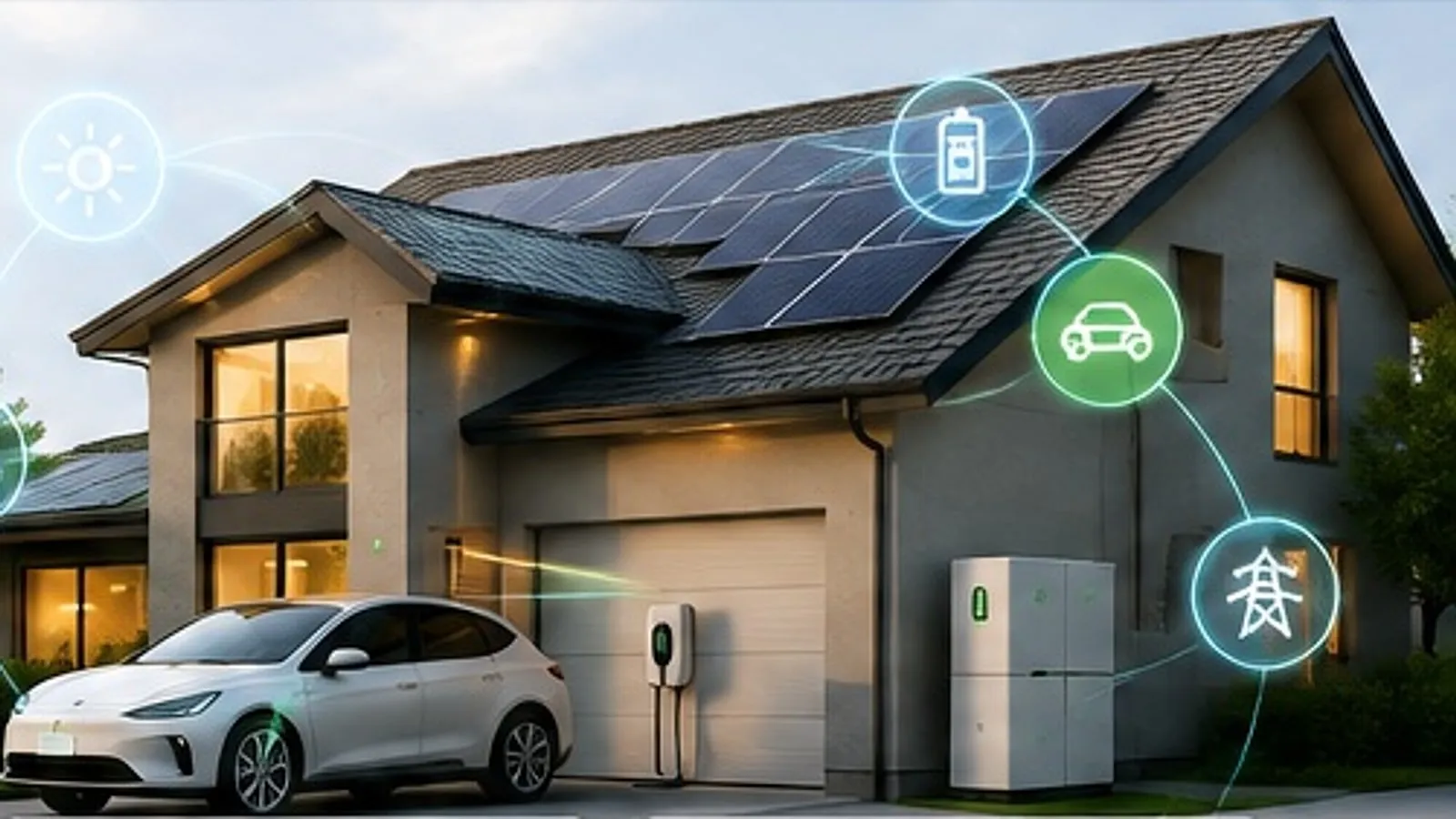
A house at dusk with rooftop solar panels, a white electric car on the driveway, a wall-mounted charger by the garage and a battery unit against the wall, linked by glowing icons for sun, battery, car and grid
Illustration · AI-generated

Rebates & Incentives

The federal credit expired in June. What is left, and how to find yours.

Learn more

Charging Basics

Levels, kilowatts and charge curves — the fundamentals, in plain English.

Learn more

Installation

Permits, panel capacity and what electricians actually charge.

Learn more

Charging Costs

Cost per kWh, cost per mile, and the tariff switch that halves it.

Learn more

Everything you need
before you plug in.

What a charger costs, what your panel can take, which connector your car actually uses, and what the electrician will quote. Every figure here comes with the arithmetic behind it.

We draw the answer.

Most charging advice is a wall of text. Every guide here carries a diagram built from the numbers in that article, so the answer is visible before you read a word.

What a home charger installation is actually made ofEvery job includes four line items: the charger itself at 400 to 900 dollars, electrician labour at 400 to 1,100 dollars, materials at 100 to 450 dollars, and permit and inspection at 50 to 300 dollars. Two further items apply only sometimes and dominate the bill when they do: outdoor trenching at 300 to over 2,000 dollars, and a 100 to 200 amp panel upgrade at 1,500 to 3,500 dollars. Whether those two apply is what separates a 1,200 dollar quote from a 5,000 dollar one.$0$1,000$2,000$3,000ON EVERY JOBCharger hardware$400 – $900Electrician labour$400 – $1,100Materials$100 – $450Permit and inspection$50 – $300ONLY SOMETIMES — AND THIS IS WHAT MOVES THE QUOTETrenching, outdoor run$300 – $2,000+Panel upgrade 100 → 200 A$1,500 – $3,500
What an installation is actually made of
Your charging speed is the lowest of three limitsHome charging power is capped by the circuit, by the wall box, and by the car’s onboard charger. The smallest of the three wins. A 48 amp wall box on a 60 amp circuit, both good for 11.5 kilowatts, still delivers only 7.7 kilowatts if the car’s onboard charger is limited to 7.7 kilowatts.The circuit11.5 kW60 A × 240 V × 80%The wall box11.5 kW48 A ratedThe car7.7 kWonboard chargerThe smallest one winsYou charge at 7.7 kW
Why a bigger charger often changes nothing
Range added per hour, by charging levelLevel 1 from a household outlet adds roughly 4 miles of range per hour, about 50 miles over a twelve hour night. Level 2 at 32 amps adds roughly 25 miles per hour, about 300 miles overnight. Level 2 at 48 amps adds roughly 36 miles per hour, about 430 miles overnight, which is more than most battery packs hold.RANGE ADDED PER HOURAFTER A 12-HOUR NIGHTLevel 1120 V outlet, 12 A4 mi/h~50 miLevel 2 · 32 A240 V, 7.7 kW25 mi/h~300 miLevel 2 · 48 A240 V, 11.5 kW36 mi/h~430 mi
What a night of charging actually returns