Can You Actually Charge an EV From Solar? The Honest Answer
Yes, but the version most people picture — plugging into the sun — is not how it works. Here is what solar charging really means, and when the arithmetic holds up.
“Charge your car from the sun” is a good slogan and a poor description of how the equipment actually works. The confusion causes real money to be spent badly — usually on a battery that was not needed, or on an array sized by a rule of thumb.
Here is the mechanism, and then the arithmetic.
What actually happens
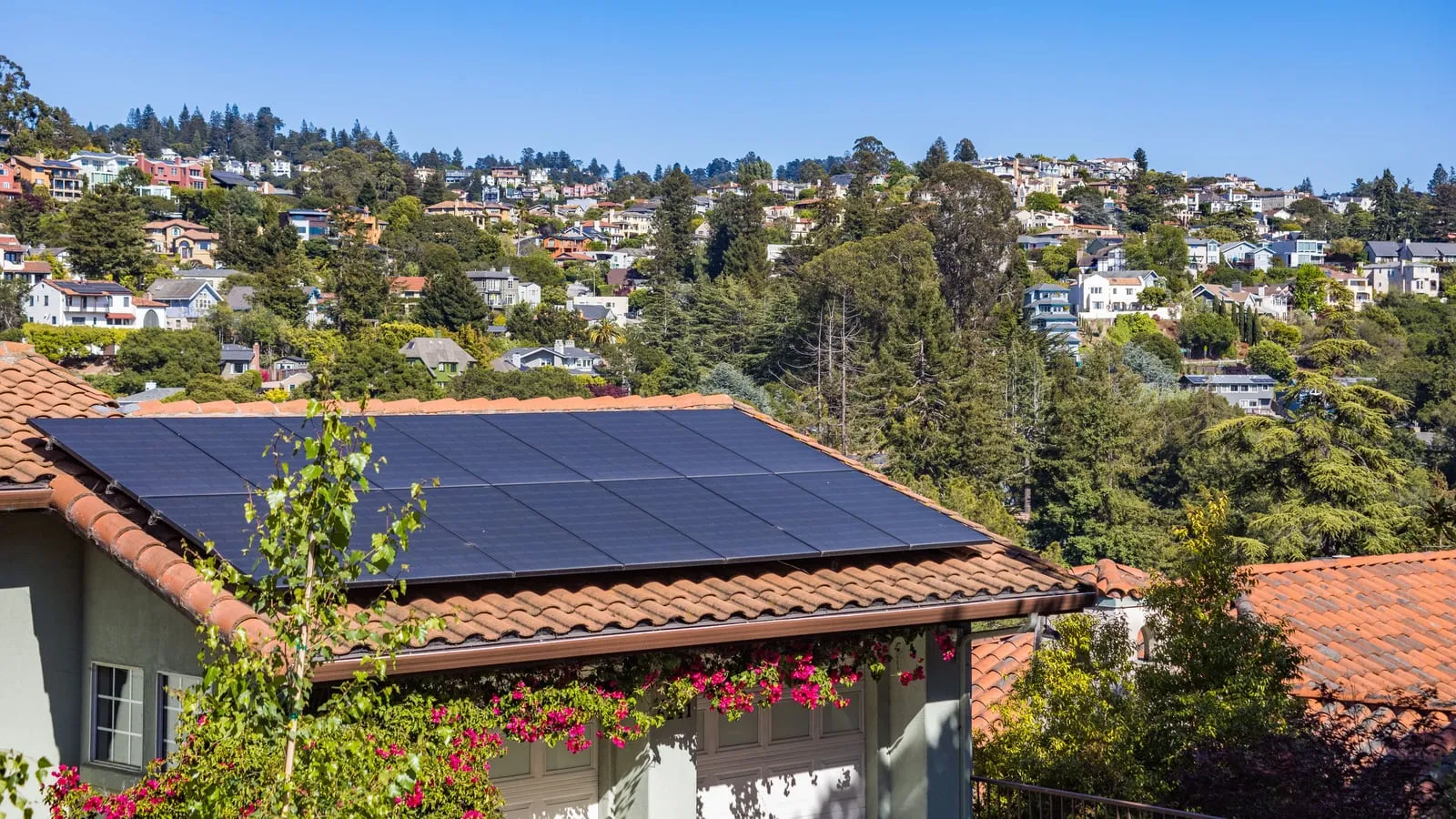
A grid-tied rooftop system does not connect to your car. It connects to your house.
Panels produce DC. An inverter converts it to AC and feeds your main panel. From there it supplies whatever is running — fridge, air conditioning, and your charger if it happens to be on. Anything left over exports to the grid.
So “solar charging” means one of two quite different things:
Direct use. The car is charging while the sun is up, and some or all of the energy comes straight off your roof rather than the grid. Genuinely solar, and the cheapest possible electricity you will ever use.
Offsetting. The car charges at night from the grid, and your daytime exports offset that consumption on the bill. Whether this works, and how well, depends entirely on your utility’s export policy.
Most households do the second and call it the first. That is fine — but the economics are set by the export policy, not by the panels.
The variable that decides everything
Your utility’s export arrangement matters more than array size, panel brand, or charger choice.
Full-retail net metering. Every exported kWh credits at the same price you pay. The grid becomes a free battery. Charge whenever you like; the accounting works out. This is the best case, and it is being phased out in a growing number of places.
Net billing / avoided cost. Exports credit at wholesale — often a third or a quarter of retail. Now the timing matters enormously: energy used directly is worth full retail, energy exported and bought back later loses most of its value. Under this structure, charging during daylight is where the money is.
No export compensation. Exports are worth nothing. Only direct use counts, and a battery starts to make sense.
Find out which you are on before modelling anything. It changes the answer by a factor of three.
Solar charging, honestly assessed
Pros
- Marginal cost of a mile approaches zero once the system is paid off
- Insulates you from the electricity price rises of recent years
- Daytime charging pairs naturally with home working or weekend driving
- An EV is a flexible load, which is exactly what a solar home wants
Cons
- Capital cost is substantial and the payback is measured in years
- Most commuters are not home during peak generation
- Winter output can be a third of summer in many latitudes
- A battery to bridge the gap often costs more than the electricity it saves
The commuter problem
The awkward truth about pairing solar with an EV: generation peaks in the middle of the day, and that is exactly when a commuter’s car is not at home.
Four ways round it, in order of cost:
- Charge at weekends. If your weekly mileage is modest, two daytime weekend sessions can cover most of it. Free, and widely overlooked.
- Work from home some days. Same effect, no equipment.
- Rely on net metering if you have full-retail. The timing genuinely does not matter.
- Add a battery. Effective and expensive. Model it against the actual electricity it displaces before committing.
Some chargers support surplus-only or PV-excess modes, drawing solely from what would otherwise export. Useful when export is poorly compensated, irrelevant under full-retail net metering. Check whether your setup benefits before paying extra for the feature.
The sizing question
Driving 12,000 miles a year at 3.5 mi/kWh needs about 3,900 kWh metered — metered rather than delivered, which is the figure your array has to cover.
How much array that takes depends on where you are — annual yield per installed kW varies by roughly a factor of two across the US, and by roof orientation, pitch and shading on top of that. Common results land somewhere around 2.5 to 4 kW of additional capacity, but treat that as a starting point for a conversation rather than a specification.
Get a quote with your actual roof and your actual usage. Anyone giving you a panel count without asking your postcode is guessing.
When it clearly works, and when it does not
Strong case: you already have solar with spare capacity, you are on full-retail net metering, you can charge in daylight at least some days, and electricity where you live is expensive.
Weak case: you would be buying an array specifically to charge the car, you are never home during the day, export compensation is poor, and you are being quoted a battery to fix it. That combination is frequently a worse deal than simply moving to an overnight time-of-use tariff, which costs nothing and can halve your cost per mile.
Solar and EVs do pair well. Just make sure the pairing is being justified by arithmetic rather than by the picture of a car parked under a panel.
Frequently asked questions
Can I charge my EV directly from solar panels?
Not in the way most people imagine. A typical rooftop system feeds your house and the grid through an inverter; the car charges from that supply like any other load. Direct DC solar-to-vehicle charging exists but is rare and expensive in residential settings.
How many solar panels does it take to charge an EV?
Driving 12,000 miles a year needs roughly 3,900 kWh metered. Depending on your location and roof, that is commonly in the region of 2.5 to 4 kW of additional array — but the honest answer depends on your irradiance, and a local quote will beat any national rule of thumb.
Does charging at night use my solar?
Not directly. Without a battery, overnight charging draws from the grid. Whether that still counts as solar depends entirely on how your utility credits the energy you exported during the day.
Is a home battery needed to charge from solar?
Only if you cannot charge during daylight and your utility does not offer favourable export credit. Under full-retail net metering the grid acts as your battery at no capital cost.
Does solar make EV charging free?
The marginal cost approaches zero once the system is paid for, but the system is not free. Judge it on total payback, not on the electricity appearing to cost nothing.