NACS vs J1772: Why Your New EV Still Charges on J1772 at Home
Almost every 2026 EV ships with a NACS port. Almost every home charger is still J1772. That sounds like a problem and is not — here is what actually changed and what to buy.
HomeEnergyX may be supported by display advertising. Advertising does not influence our calculations or conclusions. This page contains no affiliate links.
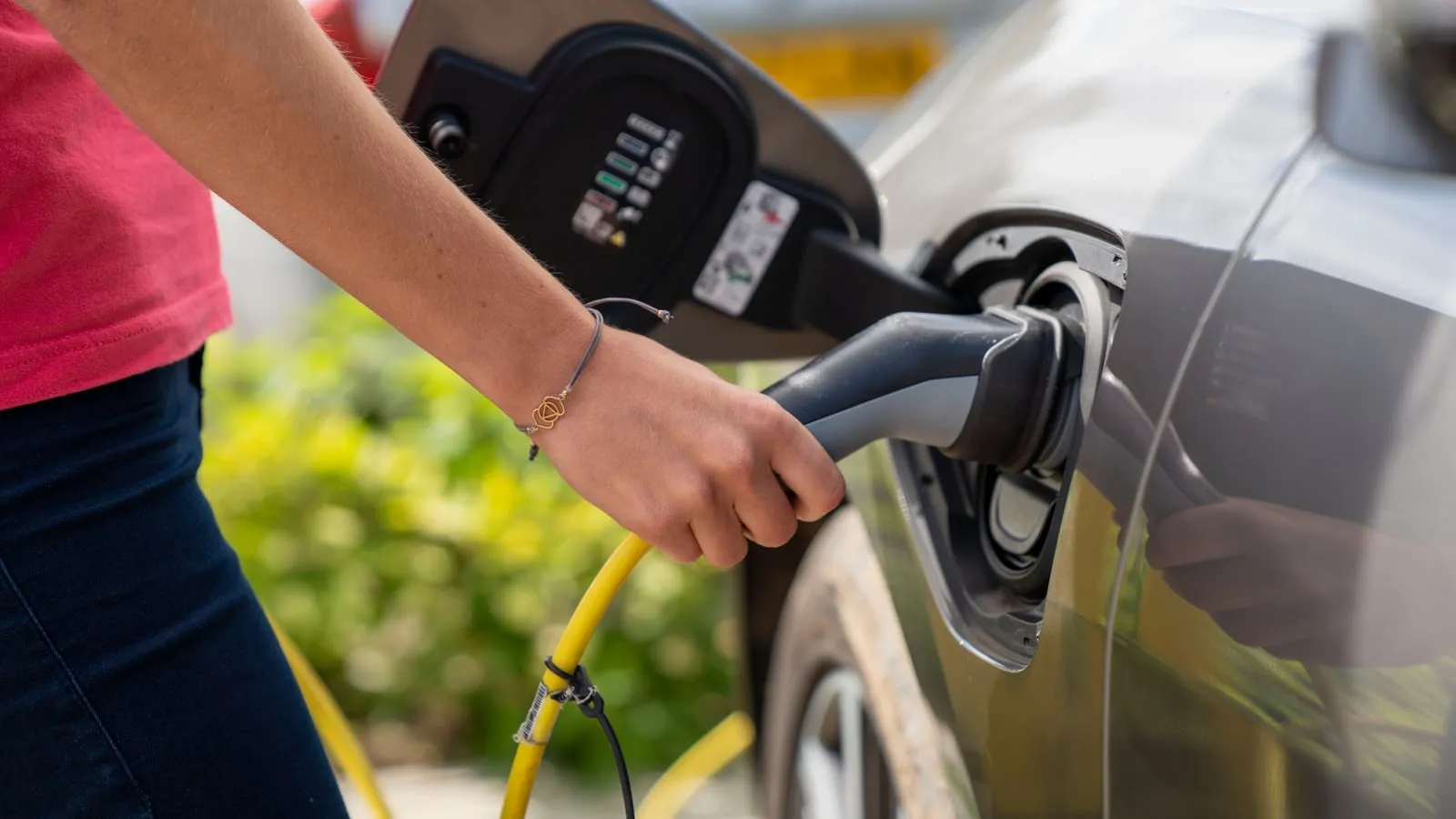
There is a specific confusion doing the rounds in 2026, and it costs people money. It goes like this: my new car has a NACS port, Tesla’s connector, so I need a NACS home charger.
You almost certainly do not. The connector change was about fast charging on road trips. Your garage was never part of that story.
What actually changed
Between 2024 and 2026, essentially the whole industry moved to Tesla’s connector, now standardised as NACS. Ford, GM, Rivian, Hyundai, Kia, Volvo, Polestar, Mercedes, Honda, Toyota, Subaru, Nissan, BMW, Volkswagen, Audi and Porsche all committed, and by model years 2025 and 2026 the majority of new EVs ship with a native NACS port.
The reason was DC fast charging access. Tesla’s Supercharger network was larger and more reliable than the alternatives, and adopting the connector was the cheapest way in. Nothing about that reasoning touches your driveway.
Why home charging did not change
This is the part that gets lost.
Level 2 home charging is AC. Your wall box does not convert anything. It is closer to a smart switch than a charger: it verifies the connection, negotiates a current limit with the car, and then passes household AC through. The actual conversion from AC to DC happens inside the car, in the onboard charger.
That AC handshake is defined by J1772, and NACS did not replace it. A NACS port accepts the same AC signalling — the pins are arranged differently, which is what the adapter resolves, but the protocol underneath is the same.
So:
| Home Level 2 (AC) | Public DC fast | |
|---|---|---|
| What changed with NACS | nothing meaningful | the whole access story |
| Connector on the wall box | still J1772 | N/A |
| Adapter needed | one, and it came with the car | sometimes |
| Conversion happens | in the car | in the charging station |
What to actually buy
A J1772 wall box. It remains the correct default for almost every household, for three reasons:
- Your car came with the adapter. Manufacturers ship a J1772-to-NACS adapter precisely because they know the installed base of home and workplace equipment is J1772.
- It covers both cases. If a second car in the household has a J1772 inlet — any EV from the last decade does — a J1772 box serves both. A NACS box does not serve the older car without another adapter.
- It survives selling the car. A wall box outlives two or three vehicles. A connector choice made for today’s car is a bet you do not need to place.
Buy a NACS wall box only if every vehicle you expect to own has a NACS port and you strongly prefer not handling an adapter.
J1772 wall box vs NACS wall box, for a NACS car
Pros
- J1772 works with every EV sold in North America in the last decade
- The adapter is already in your car, at no extra cost
- Far larger choice of units, and more competitive pricing
- Keeps its value and usefulness if you change cars
Cons
- One extra component to attach each time you plug in
- A cheap third-party adapter is a genuine thermal risk
- Slightly bulkier connection hanging from the port
The adapter question, honestly
Adapters have a bad reputation that is about half deserved.
The adapter supplied with your vehicle is fine. It was validated by the manufacturer against that car’s onboard charger and carries the warranty.
Cheap unbranded adapters are the actual risk, and the physics is simple: a Level 2 session pushes 32 to 48 amps through a mechanical joint for eight hours straight. If the contact resistance is high because the metal is thin or the fit is loose, that joint turns electrical energy into heat. Connector melting is not a theoretical failure mode — it is the characteristic way this goes wrong.
Two habits worth adopting regardless of what you bought:
- Touch the connection after the first hour of the first few sessions. Warm is normal. Hot enough that you want to let go is not — stop and investigate.
- Support the weight. An adapter plus a heavy cable hanging off the port levers the contacts apart over time. Route the cable so it hangs from a hook, not from the car.
What about the reverse direction?
Worth being precise, because the two adapters are not interchangeable:
- J1772-to-NACS — lets a NACS car use a J1772 station. This is the one that ships with new non-Tesla EVs and the one you use at home.
- NACS-to-J1772 — lets an older J1772 car use a Tesla destination charger. Different device, different direction.
If you buy the wrong one it simply will not fit, so the mistake is cheap. But the names are close enough that it is worth reading twice.
Common mistakes
- Buying a NACS wall box to “future-proof”. It is the opposite. J1772 plus an adapter covers strictly more vehicles than NACS alone.
- Assuming NACS charges faster at home. It does not. Home speed is set by your circuit and the car’s onboard charger, not by the connector shape.
- Replacing a working J1772 charger after buying a NACS car. There is no reason to. Use the bundled adapter.
- Buying a $25 adapter to avoid using the free one. The included adapter is the safest component in this entire chain.
The bottom line
The connector transition is real and it mattered a great deal — for road trips. For the wall of your garage, J1772 remains the right purchase in 2026, the adapter came free with your car, and anyone telling you to replace working equipment is selling something.
If you have not yet decided whether you need Level 2 at all, start with Level 1 vs Level 2 — that question is worth far more money than this one.
Frequently asked questions
Do I need a NACS home charger for a NACS car?
No. Home Level 2 charging is AC, and the J1772 standard still carries it. Cars with a NACS port ship with a J1772-to-NACS adapter for exactly this, and a J1772 wall box remains the safest default purchase.
What is the difference between NACS and J1772?
J1772 is the AC connector used for Level 1 and Level 2 charging in North America. NACS is Tesla's connector, now adopted industry-wide, which carries both AC and DC in a single smaller port. The switch was driven by DC fast charging access, not by home charging.
Will a J1772 charger become obsolete?
Not in any timeframe that should affect a purchase today. Adapters ship with the cars, they are passive on AC, and the installed base of J1772 equipment is enormous. A wall box bought now will still work in ten years.
Are NACS to J1772 adapters safe?
The adapter that came with your car is. Cheap unbranded adapters are the risk — a poor contact carrying 40 amps for eight hours generates heat. Buy from the vehicle manufacturer or a recognised brand, and check for warmth at the joint during the first few sessions.
Should I buy a NACS wall box instead?
Only if every vehicle in the household has a NACS port and you expect that to stay true. A J1772 unit plus the bundled adapter covers both cases, and keeps the charger useful if you sell the car.