Charging an EV in Ecuador: What It Actually Costs
Ecuadorian residential electricity runs about 10.6 cents per kWh in 2026 — 42% below the US. Here is what that means per kilometre, and the subsidy question behind it.

Ecuador is an unusually good place to run an electric car, and an unusually poorly documented one. The country is dollarised, so the numbers are directly comparable to US figures without an exchange rate in the way — and they are dramatically lower.
Here is the arithmetic, with the 2026 regulated figures.
The 2026 numbers
Ecuador’s electricity regulator, ARCONEL, publishes the reference values each year. For 2026:
| Estimated average billed price | $0.1061 / kWh |
| Technical cost of supply | $0.1283 / kWh |
| Gap absorbed by the state | $0.0222 / kWh |
| Annual cost of that subsidy | ~$598 million |
| Tarifa Dignidad (low consumption) | ~$0.04 / kWh |
The middle rows matter as much as the first. Ecuadorians do not pay what the electricity costs to supply. The state covers the difference, and at roughly $598 million a year that is a significant standing commitment.
What it costs to charge
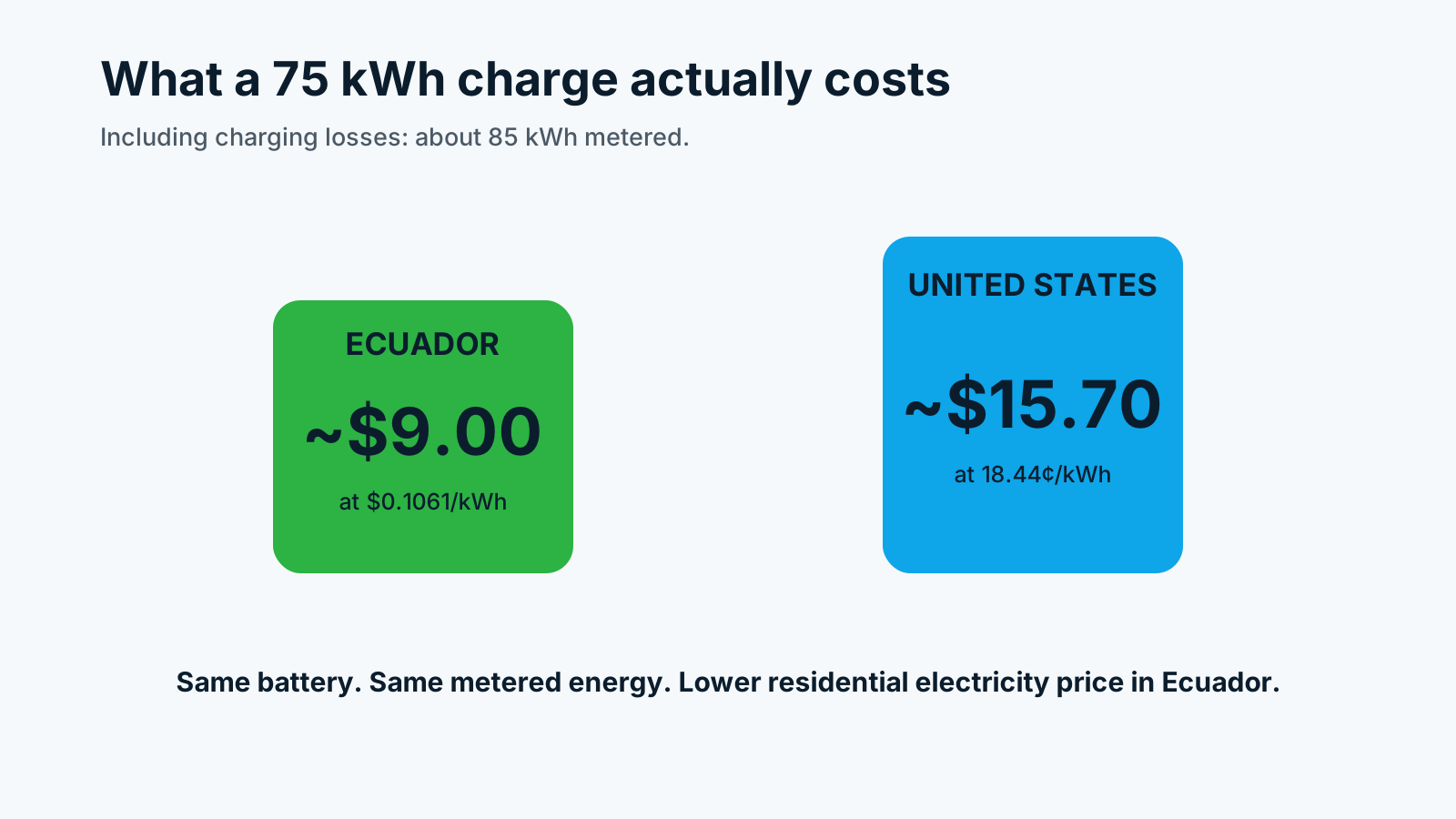
Take a 75 kWh battery, and count the 10-15% that is lost between the meter and the pack.
| Energy into the battery | 75 kWh |
| Energy actually metered | ~85 kWh |
| Cost at $0.1061 | ~$9.00 |
For comparison, the same charge costs about $15.70 in the United States at the US average of 18.44 ¢/kWh, and Ecuador sits near the bottom of the international range.
Per kilometre
At 3.5 km/kWh — a reasonable figure for a mid-size EV — and 88% charging efficiency:
0.1061 ÷ (3.5 × 0.88) = 0.034 USD per kmAbout 3.4 US cents per kilometre, or roughly 5.5 cents per mile. Against petrol at Ecuadorian pump prices the gap is wide, though the exact ratio depends on which subsidised fuel grade you compare against — and those subsidies have themselves been under revision.
Running an EV in Ecuador
Pros
- Residential electricity around 42% below the US average
- 120/240 V at 60 Hz — US equipment and guidance apply directly
- Dollarised, so no currency risk on imported hardware
- Generation is heavily hydroelectric, so the emissions case is strong
Cons
- The tariff is subsidised and the subsidy is large enough to be a reform target
- Grid reliability has been a real issue during dry seasons
- Charging hardware is imported, with duties and limited local support
- Almost no local technical guidance exists in Spanish or English
The Tarifa Dignidad trap
Ecuador subsidises low-consumption households further through the Tarifa Dignidad, at roughly $0.04 per kWh — but only up to a monthly ceiling:
- 130 kWh/month on the coast, in the Amazon and Galápagos
- 110 kWh/month in the highlands, including Cuenca and Quito
An EV driven 1,000 km a month consumes roughly 325 kWh metered. That is between two and three times the entire Tarifa Dignidad allowance on its own.
So if your household currently qualifies, buying an EV will almost certainly end that. The car’s consumption alone exceeds the threshold, and the whole bill moves to the standard tariff.
This is worth modelling before purchase rather than discovering on the first bill. The saving against petrol is still large — but it is smaller than a naive calculation using the $0.04 rate would suggest, because you will not be paying $0.04 any more.
Voltage: Ecuador follows the US, not South America
A detail that saves real money and confusion.
Ecuador uses 120/240 V at 60 Hz with Type A and B outlets — the North American standard. Chile, Argentina and much of the Southern Cone use 220 V at 50 Hz with European-style connectors.
Practical consequences:
- US charging equipment generally works in Ecuador without conversion.
- J1772 is the relevant AC connector, as in the US.
- Level 1 charging from an ordinary Ecuadorian outlet behaves like Level 1 in the US — around 1.4 kW, adding roughly 50 to 90 km overnight.
- A 240 V circuit for Level 2 is the same job it is in the US.
This makes almost all US-oriented home charging guidance directly applicable here, including our own on Level 1 versus Level 2 and what an installation involves. Guidance written for Spain or Chile does not transfer nearly as well, despite the shared language.
The risk worth naming
The subsidy is the elephant in this article.
A billed average of 10.61 ¢ against a technical cost of 12.83 ¢ means the price signal is roughly 17% below cost. Ecuador’s electricity sector has been running a substantial deficit, and subsidy reform is a recurring policy discussion.
That does not make an EV a bad decision — even at the full technical cost of 12.83 ¢/kWh, Ecuadorian electricity would still be 30% cheaper than the US average. But if you are modelling a ten-year ownership case, run it at the unsubsidised rate as well and see whether it still works. If it only works at the subsidised price, it is a fragile case.
Frequently asked questions
How much does it cost to charge an electric car in Ecuador?
At the 2026 estimated average billed price of $0.1061 per kWh, a 75 kWh battery costs roughly $9 to fill once charging losses are counted. That is about 1.2 to 1.5 US cents per kilometre for a typical EV.
Is electricity cheaper in Ecuador than in the US?
Yes, substantially. Ecuador's 2026 estimated average is 10.61 cents per kWh against a US average of 18.44 cents — roughly 42% lower. Both are quoted in US dollars, since Ecuador is dollarised.
Does Ecuador use the same voltage as the US?
Yes. Ecuador uses 120/240 V at 60 Hz with Type A and B outlets, the same as the United States. Most US charging equipment and guidance applies directly, which is not true of Chile or Argentina at 220 V and 50 Hz.
What is the Tarifa Dignidad?
A subsidised rate of about $0.04 per kWh for low-consumption households — up to 130 kWh a month on the coast, Amazon and Galápagos, or 110 kWh in the highlands. Adding an EV will almost certainly push a household above those thresholds.
Is the low tariff guaranteed to last?
No. The regulator set a technical cost of 12.83 cents per kWh for 2026 against a billed average of 10.61, a gap the state covers at roughly $598 million a year. Subsidies of that size are a standing candidate for reform.