Installing a Home EV Charger in Ecuador: A Practical Guide
Ecuador runs 120/240 V at 60 Hz, so US hardware applies — but the electrical service, import duties and local practice do not. What actually matters before you buy.
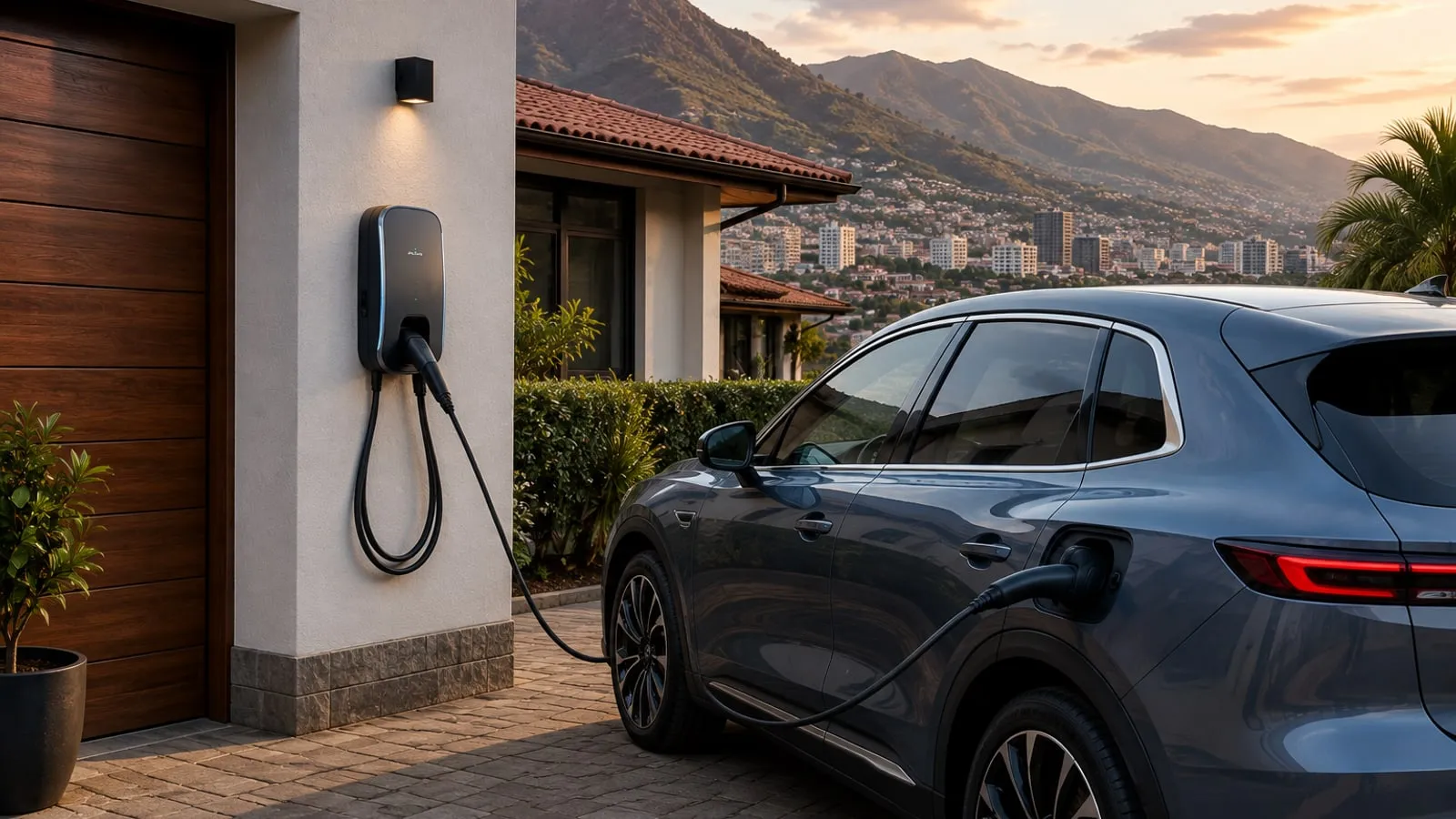
Ecuador sits in an unusual position: electrically it follows the United States, geographically it is in South America, and practically almost nothing has been written about home charging here in either language.
This is what actually matters if you are installing one.
The good news: the standard matches the US
Ecuador operates at 120/240 V, 60 Hz, with Type A and B outlets and split-phase residential service. This is the North American arrangement.
What follows from that:
- US-market chargers are electrically compatible. A unit rated for 240 V 60 Hz works here as it does in Michigan.
- J1772 is the AC connector for most vehicles, exactly as in the US.
- Level 1 from a wall outlet behaves identically — roughly 1.4 kW.
- A 240 V circuit is the same installation concept, drawing from both legs of the split-phase supply.
This matters because it means the large body of US technical guidance applies, while Spanish-language guidance written for Spain (230 V, 50 Hz, Type 2) or Chile (220 V, 50 Hz) largely does not. Shared language, wrong electrical system.
Start with Level 1 — genuinely
Before spending anything, test whether you need to.
An ordinary Ecuadorian outlet delivers about 1.4 kW, adding roughly 50 to 90 km overnight depending on the car and conditions. Urban driving in Cuenca, Quito or Guayaquil frequently falls well inside that.
Run it for two weeks and watch the battery percentage each morning. If it holds steady, you have solved the problem for zero capital cost. If it declines, you now have data on how much faster you actually need to charge — which is a much better basis for buying than a salesperson’s recommendation.
What is genuinely different here
1. Service capacity, not connector type
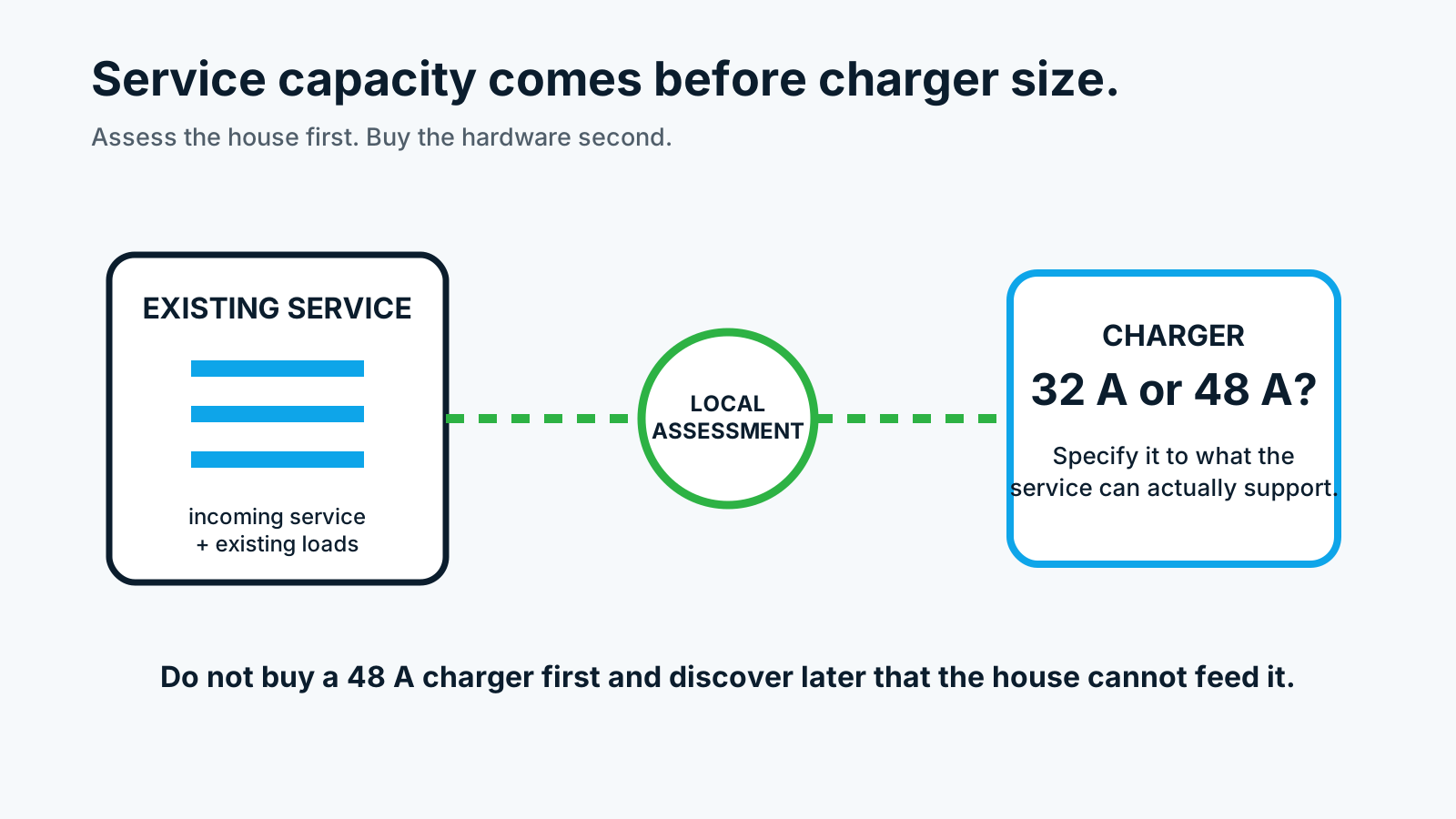
The binding constraint in Ecuadorian homes is usually how much the existing service can take, particularly in older buildings and in properties that have been subdivided.
A licensed local electrician needs to assess the incoming service and existing load before specifying a charger — the same first step as any US install. A 32 A unit on a 40 A circuit is a modest ask; 48 A on a 60 A circuit is not, in a house that was wired for lighting, a fridge and a shower heater.
Do this assessment before buying hardware. Buying a 48 A charger and then discovering the service cannot feed it is an expensive sequence, and a common one.
Importing hardware vs buying locally
Pros
- Far wider choice and lower headline prices in the US market
- Electrically compatible — 120/240 V, 60 Hz, J1772
- Access to established brands with real engineering behind them
Cons
- Import duties and shipping can erase the price advantage
- Warranty service on a personally imported unit is often not honoured
- No local support if the unit fails
- Smart features depending on cloud services may behave unpredictably
2. Landed cost, not sticker price
A $400 charger in the US is not a $400 charger here. Work out the landed cost — unit price, shipping, duties, taxes — before comparing against locally available options. The gap is frequently smaller than it appears, and the local option comes with someone to call.
3. Grid reliability
Ecuador has experienced supply restrictions during dry seasons, when hydro output falls. This is worth planning around rather than ignoring:
- Charging overnight is doubly sensible here — lower demand and better availability.
- Do not run the battery to a low state of charge routinely if supply is uncertain in your area.
- A charger that resumes automatically after a power interruption is genuinely useful. Check that behaviour before buying.
4. Code and inspection do not follow the US
This is the important caveat, and it cuts against everything above.
Electrical compatibility does not mean regulatory compatibility. The National Electrical Code has no force here. Ecuador has its own requirements for conductors, protection, earthing and inspection, and they are what your installation must satisfy.
So: take the hardware guidance from US sources, because the voltage matches. Take the installation practice from a licensed Ecuadorian electrician, because the rules do not.
A realistic sequence
- Test Level 1 for two weeks. Free, and it may end the project.
- Get the service assessed by a licensed electrician before buying anything.
- Specify the charger to the circuit the assessment says you can have — not the other way round.
- Compare landed cost of importing against locally available units.
- Have it installed and inspected to Ecuadorian requirements.
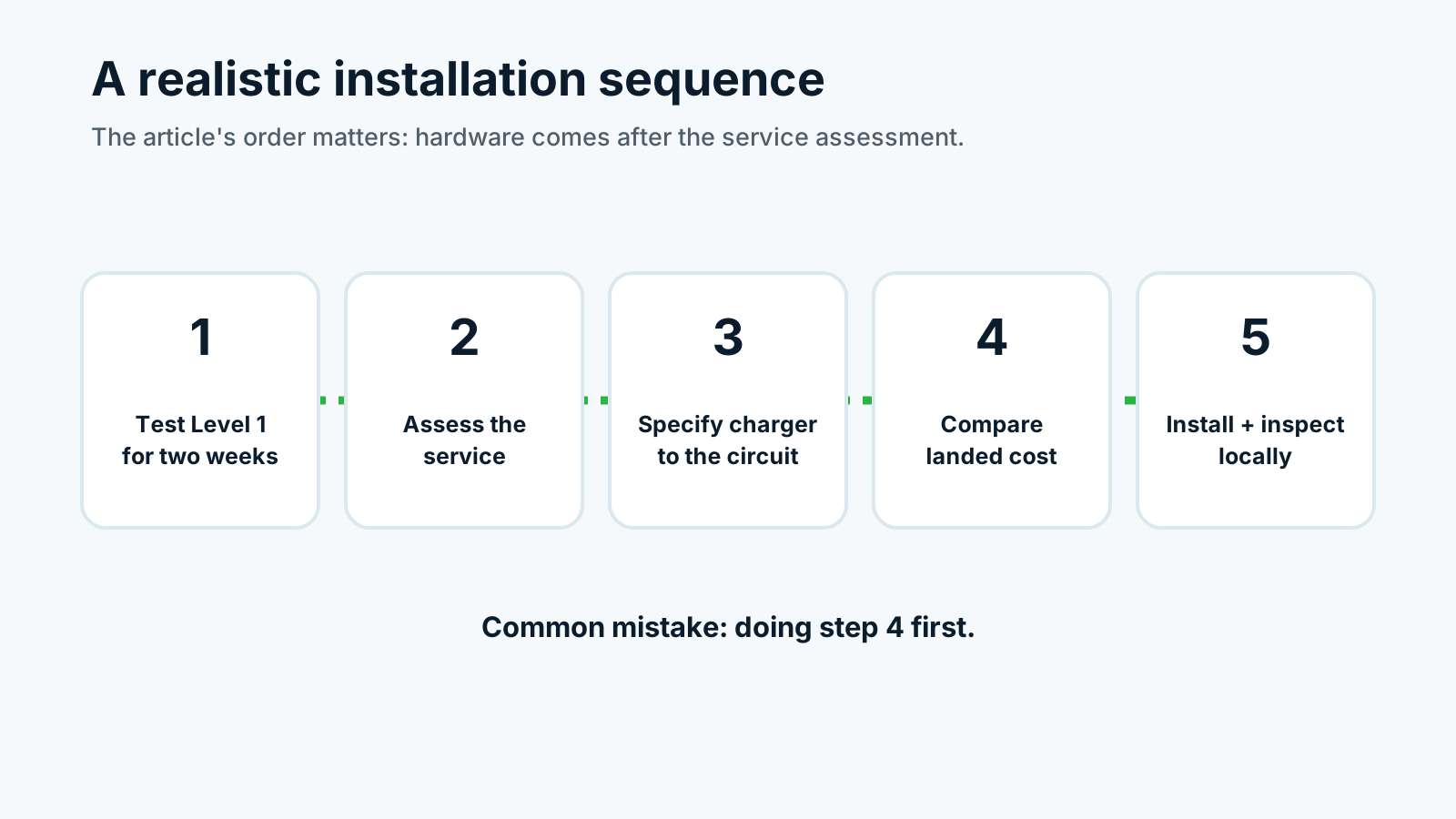
The single most common mistake is doing step 4 first. Hardware is the easy part and the cheap part; the service capacity is what determines the project.
Why so little is written about this
Ecuador’s EV market has grown quickly — sales roughly quadrupled year on year recently — from a small base. That combination produces a market with real buyers and almost no technical documentation, in either language.
Most of what a new owner finds is US content that does not mention Ecuador, or Spanish content written for a 230 V European grid. The first is closer to correct than the second, which is counter-intuitive and worth knowing.
Frequently asked questions
Can I use a US EV charger in Ecuador?
Generally yes. Ecuador uses 120/240 V at 60 Hz with the same outlet types as the United States, so US-market Level 1 and Level 2 equipment is electrically compatible. Confirm the specific unit's rated input before buying.
Do Ecuadorian homes have 240 V available?
Most have a split-phase service that can provide 240 V, the same arrangement as US homes. Whether there is spare capacity for a charger is a separate question and needs a load assessment.
Is Level 1 charging enough in Ecuador?
Often. A standard outlet delivers around 1.4 kW, adding roughly 50 to 90 km overnight. Given typical urban driving in Cuenca or Quito, that covers most daily use without any installation at all.
What should I check before importing a charger?
Rated input voltage and frequency, connector type (J1772 for most non-Tesla cars), whether the unit is hardwired or plug-in, and the total landed cost including duties. Also check whether the manufacturer will honour a warranty on a unit brought in personally.
Does the NEC apply in Ecuador?
No. Ecuador has its own regulations. US hardware guidance transfers because the voltage matches, but installation practice, protection and inspection requirements must be handled by a licensed local electrician.