Latin America Is the Fastest-Growing EV Market Nobody Writes About
Sales more than doubled year on year and the region is passing a million vehicles. Colombia hit 10% of new car sales in five years. Here is what that means for home charging.

While attention stays on North America, Europe and China, Latin America has been quietly running the fastest percentage growth in electric vehicle adoption anywhere — and doing it with almost no technical documentation in either Spanish or English.
Here are the numbers, and what they imply for anyone charging at home.
The scale
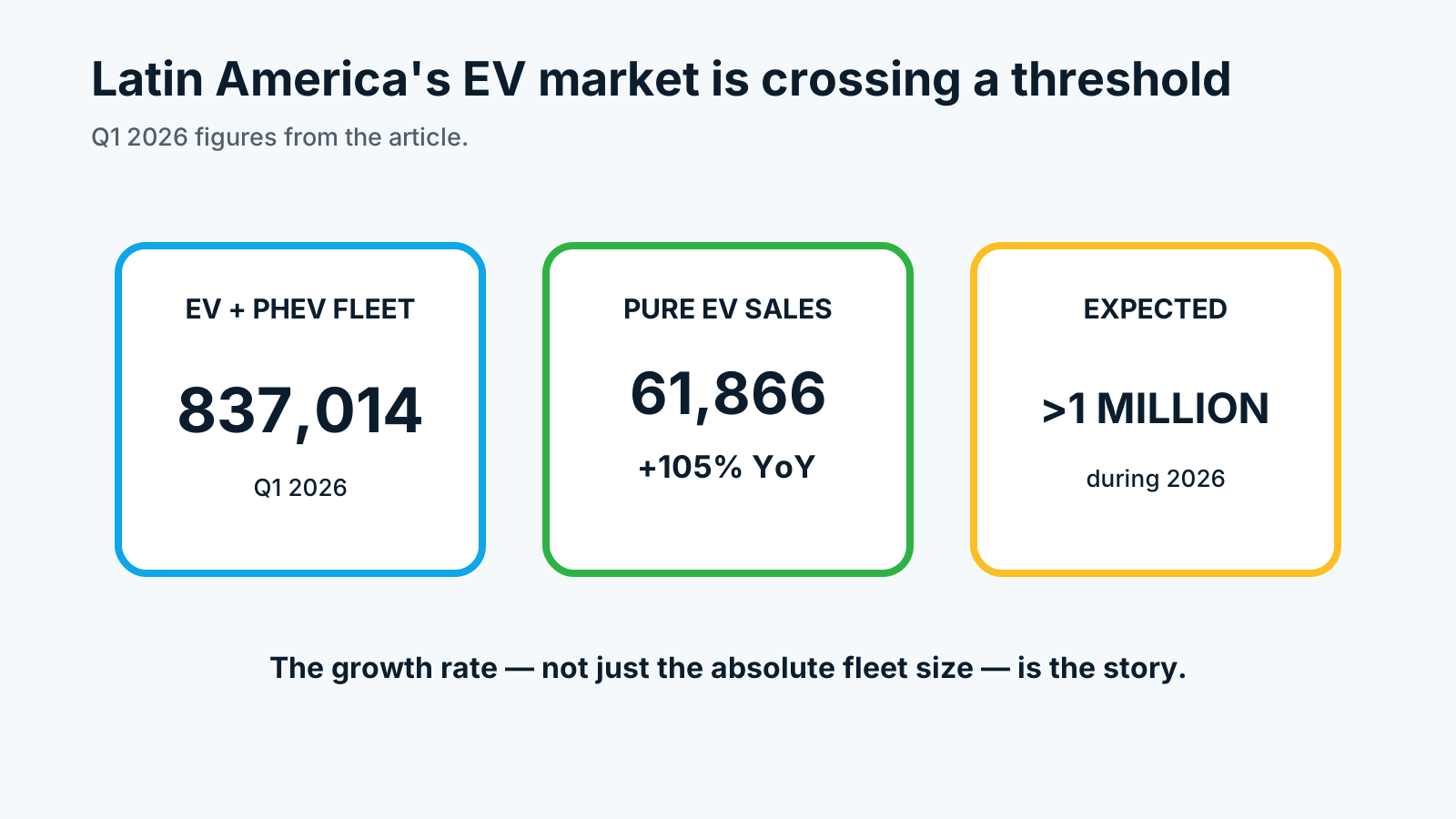
| Electric + plug-in hybrid fleet, Q1 2026 | 837,014 |
| Pure electric sales, Q1 2026 | 61,866 — up 105% year on year |
| Expected to pass | 1 million during 2026 |
That growth rate is the story. The region roughly doubled its pure-electric sales in a year, from a base that was already substantial.
Where
By volume:
| Country | Light EVs |
|---|---|
| Brazil | 473,362 — more than half the region |
| Mexico | second |
| Colombia | third |
| Uruguay, Costa Rica | following |
By adoption per capita, the order changes completely: Uruguay leads, ahead of Costa Rica, Brazil, Chile and Mexico.
By growth rate, it changes again:
- Argentina — roughly twentyfold year on year
- Ecuador — nearly quadrupled
- Colombia and Uruguay — close to 300%
- Chile, Paraguay, Peru — triple-digit growth
Colombia is the standout on market share: from essentially zero to about 10% of new car sales in five years. Mexico moved from 2% to 7% between 2024 and 2025.
The running-cost gap is far wider than in the US
This is what drives adoption, and it is not a marginal difference.
In Colombia, an electric vehicle consumes roughly 85 COP per kilometre in energy. A comparable petrol car costs about 550 COP per kilometre.
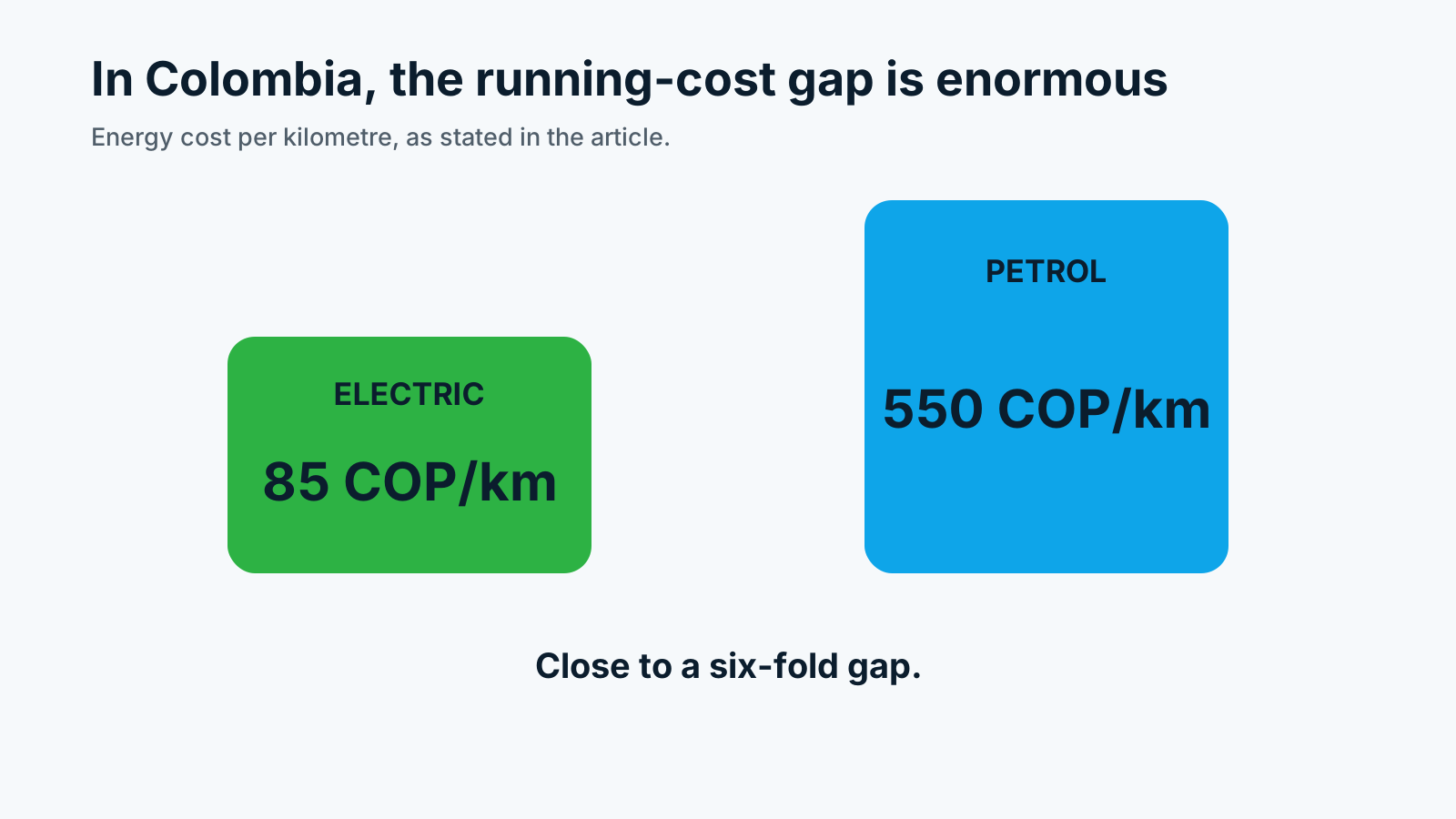
That is a sixfold gap. In the United States, the equivalent comparison lands around 40 to 55% cheaper — real, but nothing like six times.
Where petrol is expensive relative to electricity, the economic case for an EV stops being an environmental argument and becomes an obvious financial one. That is the situation across much of the region.
Charging at home in Latin America
Pros
- Running-cost advantage against petrol far larger than in the US or Europe
- Electricity is cheap in several markets, notably Ecuador
- Growth is fast enough that installer and hardware availability is improving
- Much of the region charges overnight at home rather than relying on public networks
Cons
- Voltage standards split across the region, so guidance does not transfer
- Charging hardware is largely imported, with duties and thin local support
- Public charging infrastructure is sparse outside major cities
- Grid reliability varies considerably by country and season
The voltage divide
This is the single most important technical fact for anyone reading charging advice in Spanish, and it is almost never stated.
Latin America is split between two incompatible electrical systems.
| 120/127 V, 60 Hz | 220 V, 50 Hz | |
|---|---|---|
| Countries | Mexico, Ecuador, much of Central America, Colombia (partly) | Chile, Argentina, Uruguay, Paraguay, Bolivia |
| Resembles | United States | Europe |
| AC connector | J1772 | Type 2 |
| Level 1 power | ~1.4–1.8 kW | ~2.3 kW |
The consequence is counter-intuitive: a Mexican or Ecuadorian owner should read US charging guidance, and a Chilean or Argentine owner should read European guidance — regardless of the fact that the Spanish-language content is written in the region.
In Mexico, Level 1 uses a standard 127 V outlet delivering 1.2 to 1.8 kW, and Level 2 uses 220 V with a dedicated circuit and a wallbox delivering 3.7 to 11 kW. In Chile, basic charging from a common 220 V/10 A outlet gives about 2.3 kW, and home wallboxes range from 3.7 to 22 kW — with those accounting for around 90% of residential installations.
Tariffs are structured differently too
A detail with no North American equivalent: in Colombia, residential electricity tariffs vary by estrato — a socioeconomic stratification of the household — as well as by city. Differences of up to 30% exist between Bogotá, Medellín and Cali.
That means a national “cost to charge” figure for Colombia is close to meaningless. Two identical cars in two identical houses in different cities and strata can have materially different running costs.
Anyone publishing a single per-kilometre figure for a Latin American country without naming the city and tariff structure is guessing.
What this means
A market growing at 105% a year with almost no technical documentation is an unusual situation. New owners are making four-figure electrical decisions using guidance written for a different continent and, in many cases, a different electrical system.
The most useful single step for a new owner anywhere in the region: find out whether your country is on the 120 V or the 220 V side of the divide, and then read the guidance written for that system rather than the guidance written in your language.
For Ecuador specifically — 120/240 V, 60 Hz, US standard — we cover what charging costs and what installing at home involves.
Frequently asked questions
How many electric vehicles are there in Latin America?
About 837,000 electric and plug-in hybrid vehicles were in use across Latin America and the Caribbean as of the first quarter of 2026, and the region was expected to pass a million during the year.
Which country leads EV adoption in Latin America?
Brazil by volume, with roughly 473,000 light electric vehicles — more than half the regional total. By adoption per capita Uruguay leads, ahead of Costa Rica, Brazil, Chile and Mexico.
How fast is the market growing?
Pure electric sales in the first quarter of 2026 were up about 105% year on year. Argentina multiplied sales roughly twentyfold, Ecuador nearly quadrupled, and Colombia and Uruguay grew close to 300%.
Is an EV cheaper to run in Latin America?
Frequently by a much wider margin than in the US or Europe. In Colombia an EV costs roughly 85 COP per kilometre in energy against about 550 COP for a petrol equivalent — around a sixfold difference.
What voltage do Latin American homes use?
It varies and it matters. Mexico and Ecuador use 127/120 V at 60 Hz like the US, while Chile and Argentina use 220 V at 50 Hz with European-style connectors. Charging advice does not transfer across that divide.